
Can I Get Coverage If I Only Drive in Hilton Head a Few Months a Year?
Quick Answer:
Yes. If you only drive in Hilton Head a few months each year, you can still get the right auto insurance coverage. The best solution is usually not canceling insurance altogether, but adjusting your coverage to reflect how the vehicle is actually used, where it is stored, and what risks it faces while you’re away.
Many seasonal residents arrive in Hilton Head, enjoy several months of Lowcountry living, and then return north for the remainder of the year. Some maintain a dedicated vehicle at their second home. Others leave a car in the garage of a vacation property in Sea Pines, Palmetto Dunes, Hilton Head Plantation, Wexford, Long Cove, or another island community. Eventually, a common question arises: if the vehicle spends most of the year sitting still, why continue paying for year-round insurance?
It’s a reasonable question, but it often starts from a misunderstanding about what auto insurance actually protects. Most people think about insurance only in terms of driving. They picture accidents, traffic, and liability claims. However, for many seasonal residents in Hilton Head, the greater risk isn’t what happens while driving the vehicle. It’s what happens while the vehicle is parked for months at a time.
The Vehicle Doesn’t Stop Being Exposed Just Because It Stops Being Driven
One of the biggest misconceptions among snowbirds and part-time residents is that a parked vehicle carries little or no risk. In reality, a vehicle that sits unattended for much of the year can face a completely different set of exposures than a vehicle driven every day.
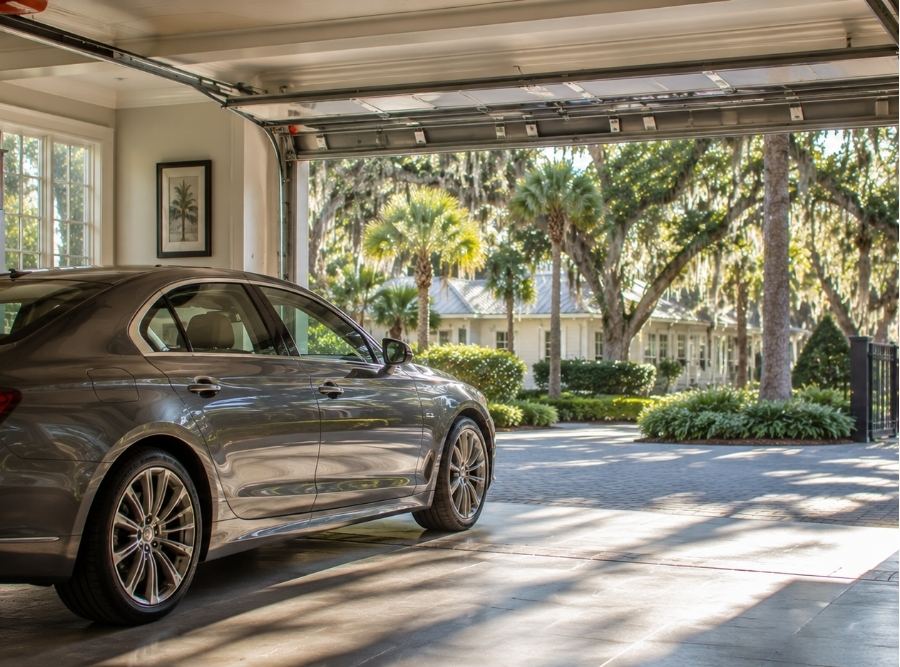
Here in Hilton Head, vehicles remain exposed to coastal humidity, salt air, tropical storms, hurricanes, falling tree limbs, flooding, theft, vandalism, and even rodent damage during extended storage periods. A car parked in a garage in Sea Pines or Palmetto Hall may be driven only a few thousand miles annually, but it still exists in an environment where weather and storage-related losses can occur unexpectedly.
This is why insurance decisions for seasonal vehicles should never be based solely on mileage. A vehicle that travels only a few months per year can still represent a significant financial asset that deserves protection throughout the entire year.
Why Canceling Coverage Is Usually the Wrong Move
When people realize how little they drive their Hilton Head vehicle, their first instinct is often to ask whether they can simply cancel insurance while they’re away. While that may sound like a money-saving strategy, it can create problems that outweigh any short-term savings.
A vehicle without coverage may have no protection against theft, storm damage, vandalism, fire, or other physical losses. If a hurricane moves through the Lowcountry while you’re hundreds of miles away, the fact that the vehicle wasn’t being driven won’t matter. The damage can still be substantial. Likewise, if a tree falls during a tropical storm or floodwaters affect a storage area, there may be no insurance protection available if coverage has been removed entirely.
There are also situations where a vehicle unexpectedly gets used while you’re away. Family members, visitors, property caretakers, or other authorized drivers may occasionally need access to the vehicle. Coverage decisions should account for those possibilities rather than assuming the vehicle will remain untouched for months at a time.
The goal is not necessarily to eliminate insurance. The goal is to make sure the insurance matches reality.
Seasonal Residents Often Have More Options Than They Realize
Many seasonal residents assume their only choices are either carrying a full traditional auto policy or canceling coverage entirely. In reality, there are often more nuanced solutions available depending on the vehicle, ownership situation, usage patterns, and insurance carrier.
For some households, low-mileage rating programs may help align premiums with actual driving habits. Others may benefit from reviewing deductibles, updating annual mileage estimates, adjusting coverage structures, or evaluating how the vehicle is classified within the policy. Snowbirds who maintain homes in multiple states may also need to review garaging locations and residency information to ensure the policy accurately reflects where the vehicle spends most of its time.
The important point is that insurance should reflect actual usage, not assumptions made years ago when the vehicle was driven much more frequently. Retirement, second-home ownership, and seasonal living often create opportunities for meaningful policy adjustments that many people never explore.
Hilton Head’s Environment Changes the Conversation
If this article were written for an inland community, the discussion might be different. Hilton Head introduces unique factors that seasonal residents should consider before making coverage decisions.
Hurricane season often overlaps with the months many snowbirds are away from South Carolina. Vehicles left behind may spend weeks or months unattended during periods of elevated storm activity. Coastal humidity can accelerate deterioration, while salt air exposure can create long-term wear issues that don’t exist in many northern climates. Properties near marshes, lagoons, golf courses, and heavily wooded areas may also face additional risks from falling limbs and storm debris.
This is one reason we encourage seasonal residents to think beyond mileage. The vehicle may not be accumulating many miles, but its environment still matters. Insurance decisions should reflect both how often the vehicle is driven and the conditions it experiences while parked.
The Most Expensive Mistake Is Assuming Low Mileage Equals Low Risk
One of the most common insurance misunderstandings is the belief that less driving automatically means less risk. While fewer miles can certainly influence insurance considerations, driving exposure is only one part of the equation.
Many of the largest claims involving seasonal vehicles occur while the vehicle isn’t moving at all. Storm damage, flooding, theft, vandalism, and other physical damage losses can create significant expenses regardless of annual mileage. That’s why reducing coverage without understanding the full risk picture can create problems that only become apparent after a loss occurs.
A better approach is to review the vehicle’s actual usage, storage conditions, location, value, and ownership situation with an experienced insurance advisor. In many cases, there are opportunities to improve efficiency without sacrificing important protection.
Your Lifestyle Has Changed—Your Insurance Should Reflect It
For many Hilton Head snowbirds, retirees, and second-home owners, life looks very different today than it did ten years ago. Vehicles may be driven less frequently, stored for longer periods, and used in entirely different ways than they once were. Insurance should evolve alongside those changes.
At Coastal Haven Insurance, one of the most valuable conversations we have with seasonal residents isn’t about finding the lowest premium. It’s about making sure coverage reflects reality. When a policy is built around how you actually live, where you actually spend your time, and how your vehicles are actually used, you’re far more likely to have the protection you need without paying for coverage that no longer makes sense.

Coastal Haven Insurance Partners is an independent, locally owned insurance agency located in Bluffton, SC (40 Pennington Dr Suite E). Led by partners Coley Davis, Travers Davis, and William Voelkel, the firm brings over 30 years of combined insurance and leadership experience to the South Carolina Lowcountry. The team specializes in tailored homeowners, flood, windstorm, auto, and commercial insurance. They share straightforward guidance to help coastal residents and business owners protect their assets with confidence.