Does Homeowners Insurance Cover Dock or Boat Lift Damage in Beaufort, SC?
Quick Answer:
Sometimes. Homeowners insurance may cover certain types of dock or boat lift damage if the loss is caused by a covered peril, such as wind or a fallen tree. However, coverage depends on how the dock or boat lift is classified under your policy, and many policies exclude damage caused by flooding, storm surge, wear and tear, corrosion, or ongoing deterioration.
One of the realities of waterfront living in Beaufort is that docks and boat lifts take a beating. Salt air, tidal movement, boat wakes, tropical storms, and hurricane season create conditions that most inland homeowners never have to think about. Whether your property sits along Battery Creek, the Beaufort River, Lady’s Island waterways, or one of the area’s many tidal creeks, maintaining a dock or boat lift is simply part of owning waterfront property.
The problem is that many homeowners assume their dock is automatically covered because it sits on their property. Others assume that because a hurricane caused the damage, insurance will automatically pay for repairs. Unfortunately, waterfront structures often fall into one of the most misunderstood areas of homeowners insurance.
Understanding what may be covered, what is commonly excluded, and where homeowners often get caught off guard can help prevent costly surprises after the next major storm.
Docks Are Often Covered Differently Than Your Home
One of the biggest misconceptions we see is the belief that a dock is insured exactly like the house itself. In many homeowners policies, docks may fall under what’s commonly known as “other structures coverage,” which applies to structures that are not physically attached to the home. Coverage can vary significantly depending on the insurance company, the type of dock, and how the structure is classified within the policy.
Permanent docks built on pilings are often treated differently than floating docks, seasonal docks, or removable structures. Boat lifts can create additional complexity because they may contain motors, electrical components, cables, pulleys, and mechanical systems that are not always treated the same way as the dock itself.
This is where homeowners often run into problems. They assume everything attached to the waterfront structure is protected equally, only to discover after a loss that different components may be evaluated differently during the claims process.
The most important takeaway is that a dock being located on your property does not automatically guarantee coverage for every type of damage that occurs.
The Cause of the Damage Often Determines the Claim Outcome
When it comes to docks and boat lifts, the question usually isn’t whether the structure exists on the property. The question is what caused the damage.
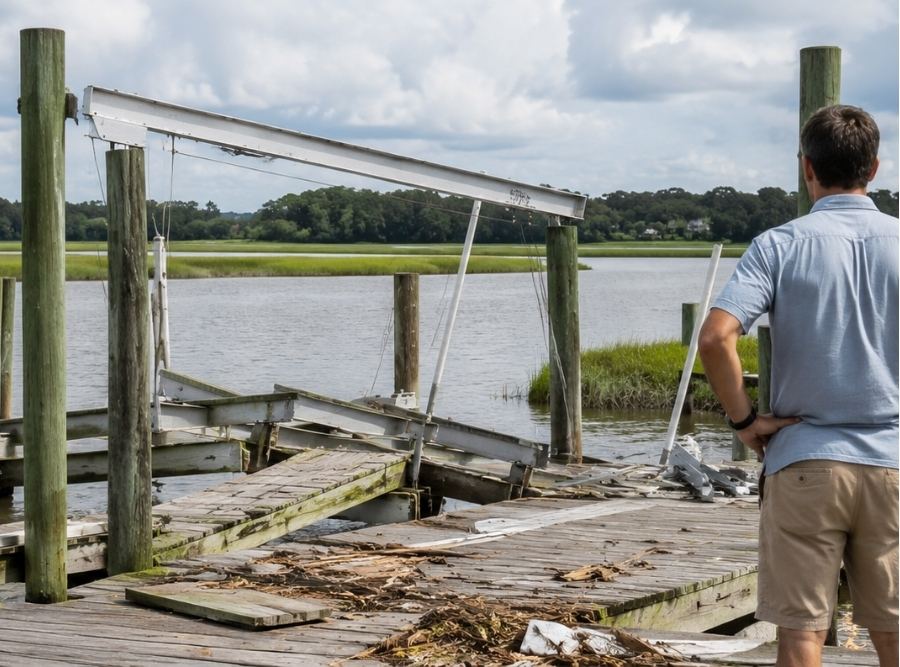
For example, if a severe windstorm causes a tree to fall onto a dock, that may be treated very differently than years of gradual deterioration that finally become noticeable after the storm passes. Similarly, sudden storm-related damage may be viewed differently than long-term corrosion, rotting lumber, failing cables, or structural weakening caused by years of saltwater exposure.
This distinction is particularly important in Beaufort’s coastal environment. Waterfront structures face constant exposure to humidity, salt air, tidal fluctuations, and marine conditions. Over time, even well-maintained docks experience wear that insurance policies generally are not designed to address. Insurance is intended to respond to certain sudden and accidental losses, not routine maintenance issues or predictable deterioration.
We’ve seen situations where a homeowner believes a hurricane destroyed a dock, while an inspection reveals that years of corrosion and structural weakening had already compromised the structure before the storm arrived. Those situations often become far more complicated than homeowners expect.
Why Flooding and Storm Surge Create So Much Confusion
Perhaps the biggest misunderstanding involves flood damage.
Many Beaufort homeowners assume that if a hurricane causes flooding or storm surge, their homeowners insurance will automatically cover dock repairs. Unfortunately, flood-related losses are often treated very differently than wind-related losses. Standard homeowners policies generally do not cover flood damage, and flood insurance policies frequently have limitations regarding docks, piers, boat lifts, and structures located over water.
This distinction becomes especially important for waterfront properties throughout areas like Lady’s Island, Port Royal, Shell Point, Habersham, and other communities located near tidal waterways. A homeowner may experience both wind damage and flood-related damage during the same storm, yet different portions of the loss could be evaluated under entirely different coverage rules.
The result is that two neighbors who experienced the same hurricane may have very different claim outcomes depending on how the damage occurred and how their coverage is structured.
That is why reviewing waterfront exposures before hurricane season is often far more valuable than trying to understand coverage after a claim has already happened.
What Most Waterfront Homeowners Overlook Until It’s Too Late
One of the most common mistakes waterfront homeowners make is focusing exclusively on the house while overlooking the value of the structures surrounding it.
Boat lifts, docks, walkways, pilings, electrical systems, and waterfront improvements often represent a significant investment. Yet many homeowners are unsure how those structures are insured, what limits apply, or whether additional endorsements may be available.
We’ve also seen homeowners assume that because their dock has survived previous storms, it will continue performing the same way indefinitely. The reality is that coastal structures age differently. Saltwater corrosion, repeated tidal movement, and years of environmental exposure can quietly weaken components long before visible signs appear.
The best time to understand how your dock or boat lift is insured is before a major storm arrives. Once damage occurs, the policy language becomes far more important than assumptions.
The Difference Between a Covered Loss and a Costly Surprise
Waterfront living is one of the reasons so many people choose Beaufort and the South Carolina Lowcountry. Private docks, boat lifts, and access to the water add tremendous value to a property, but they also create unique insurance questions that many homeowners never encounter elsewhere.
The key is understanding that not all dock damage is treated the same way. The cause of the loss, the condition of the structure, the type of damage involved, and the policy itself all play important roles in determining how a claim may be handled. Waiting until after a storm to discover coverage limitations can be an expensive lesson.
For Beaufort homeowners, one of the smartest steps is periodically reviewing waterfront structures as part of a broader insurance review. Knowing how your dock, boat lift, and other waterfront improvements fit into your overall protection strategy can help prevent surprises when the next storm moves through the Lowcountry.
Coastal Haven Insurance Partners is an independent, locally owned insurance agency located in Bluffton, SC (40 Pennington Dr Suite E). Led by partners Coley Davis, Travers Davis, and William Voelkel, the firm brings over 30 years of combined insurance and leadership experience to the South Carolina Lowcountry. The team specializes in tailored homeowners, flood, windstorm, auto, and commercial insurance. They share straightforward guidance to help coastal residents and business owners protect their assets with confidence.