
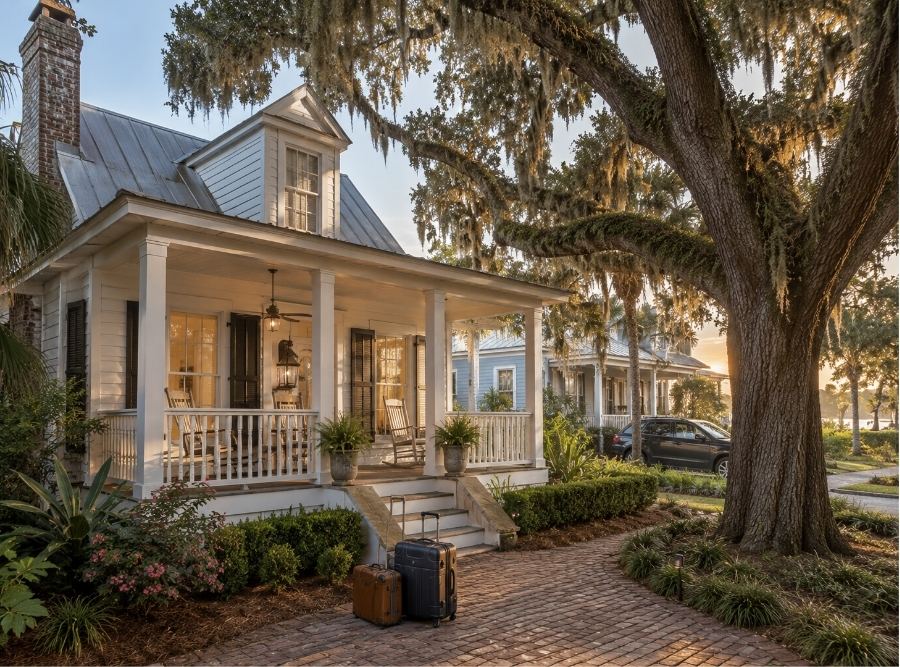
Can I Get Homeowners Insurance in Beaufort, SC If I Rent My Home on Airbnb or VRBO?
Quick Answer:
Yes, you can often get insurance for a home that is rented on Airbnb or VRBO in Beaufort, but your standard homeowners policy may not fully cover short-term rental activity. Depending on how often you rent the property, you may need a short-term rental endorsement, a specialized vacation rental policy, or another coverage solution designed for Airbnb and VRBO hosts.
Many Beaufort homeowners are looking for ways to generate additional income from their properties. Some rent a room a few weekends each year, while others operate full-time vacation rentals in areas like Downtown Beaufort, The Point, Habersham, Lady’s Island, Port Royal, or waterfront communities throughout the Lowcountry.
The challenge is that homeowners insurance is usually designed for owner-occupied residential use, not transient guests. Once paying guests begin staying at the property, the risk profile changes, and so does the insurance conversation.
One of the biggest mistakes property owners make is assuming their existing homeowners policy automatically adjusts to accommodate Airbnb or VRBO activity. In many cases, it does not.
Why Airbnb and VRBO Change the Insurance Picture
Insurance companies evaluate risk based partly on how a property is used. A primary residence occupied by the owner presents a different exposure than a home welcoming new guests every week.
From an underwriting perspective, short-term rentals create additional liability concerns, increased property damage exposure, and more frequent occupancy turnover. Guests are unfamiliar with the property, may have access to pools, docks, stairways, golf carts, waterfront areas, or other features, and can unintentionally create situations that traditional homeowners policies were not originally designed to address.
This does not automatically mean your current insurer will refuse coverage. Some carriers allow occasional short-term rentals through endorsements, while others require policy modifications or entirely different insurance products. Some carriers may decline short-term rental activity altogether.
The important point is that the property’s actual use must match what the insurance company believes it is insuring.
Does a Standard Homeowners Policy Cover Airbnb Guests?
This is where confusion often begins.
Many homeowners assume that because they still live in the home, or because they only rent occasionally, nothing changes from an insurance standpoint. Unfortunately, that assumption can create significant problems if a claim occurs.
A standard homeowners policy may provide some protection in certain situations, but coverage can become more complicated when paying guests are involved. The presence of rental income introduces business-use considerations that many traditional homeowners policies were not intended to handle.
The specific impact depends on the insurance carrier, policy language, frequency of rentals, whether the entire home or just a room is rented, and how the property is being marketed and used.
This is why insurance applications increasingly ask direct questions about Airbnb, VRBO, home-sharing, and short-term rental activity. Insurance companies understand that these arrangements have become common, and many want accurate occupancy information before offering or renewing coverage.
Is Airbnb’s Protection Program Enough?
Many hosts initially believe Airbnb’s protection programs eliminate the need for specialized insurance. While Airbnb offers certain protections, relying exclusively on those programs can be risky.
Airbnb’s programs are not the same as owning a properly structured insurance policy that is designed specifically for your property’s use. Coverage conditions, limitations, exclusions, claim procedures, and liability considerations can differ significantly.
The question is not whether Airbnb offers any protection. The real question is whether those protections provide the complete level of coverage you need for the structure, your personal assets, potential lawsuits, guest injuries, loss of rental income, and coastal property risks.
For most property owners, the safer approach is viewing platform protections as a supplement rather than a replacement for properly structured insurance.
The Difference Between Occasional Rentals and Full-Time Vacation Rentals
One of the most important factors insurers evaluate is how frequently the property is rented.
A homeowner who rents a guest room a few weekends each year often presents a different risk profile than someone operating a dedicated vacation rental with weekly guest turnover. Likewise, an owner-occupied property typically receives different underwriting treatment than a non-owner-occupied investment property.
In Beaufort, this distinction is particularly important because many owners fall somewhere in the middle. A retired couple may rent their home during local events or peak tourism seasons. A military family relocating from Parris Island may temporarily rent their property after receiving orders elsewhere. A second-home owner on Lady’s Island may rent during the busiest travel months while using the property personally throughout the rest of the year.
Each scenario can lead to different insurance requirements.
The more rental activity resembles a business operation, the more likely specialized coverage becomes necessary.
Coastal Beaufort Properties Often Face Additional Insurance Scrutiny
Short-term rental insurance becomes even more important when the property is located in a coastal environment.
Many Airbnb and VRBO properties throughout Beaufort County feature waterfront access, docks, boat lifts, pools, elevated construction, marsh views, or proximity to tidal waterways. While these features are attractive to guests, they also create additional underwriting considerations.
Properties in communities near Battery Creek, Port Royal, Lady’s Island, Shell Point, Habersham, and other coastal areas often face questions regarding flood exposure, storm vulnerability, guest liability, and hurricane-related risks.
Owners sometimes focus exclusively on guest coverage and forget about broader property exposures. A hurricane does not care whether the home is owner-occupied or rented to vacation guests. The insurance structure still needs to properly address coastal realities, including wind, flood, and property protection concerns.
This is especially important because flood insurance remains separate from homeowners insurance in most situations, regardless of whether the property is a primary residence or a short-term rental.
What Happens If You Don’t Tell Your Insurance Company?
This is one of the most common questions homeowners ask.
Many people assume that occasional rentals are too minor to mention or that insurance companies will never know the property is listed online. However, rental activity is increasingly easy for carriers to identify through underwriting reviews, renewal questionnaires, inspections, public listings, and claim investigations.
Problems often arise when a loss occurs and the carrier discovers the property was being used differently than disclosed on the policy application.
That does not automatically mean every claim will be denied. However, undisclosed rental activity can create coverage disputes, underwriting complications, non-renewal issues, and difficulties obtaining future insurance.
The simplest solution is usually the best one: discuss the rental activity before listing the property rather than after a claim occurs.
The Smartest Insurance Move Before Listing Your Property
The question should never be, “Can I get away with using my current homeowners policy?”
The better question is, “Does my current coverage actually match how I’m using the property?”
For some Beaufort homeowners, the answer may be a simple endorsement. For others, it may require a vacation rental policy or a more specialized insurance solution. The goal is not necessarily buying more insurance. The goal is making sure the coverage aligns with the property’s actual use before guests ever arrive.
As short-term rentals continue to grow throughout Beaufort, Port Royal, Lady’s Island, Habersham, and surrounding communities, properly structured insurance has become just as important as the listing itself.
Your Airbnb Income Shouldn’t Create an Insurance Surprise
Short-term rentals can be an excellent way to generate income, offset ownership costs, or maximize the value of a Beaufort property. However, insurance needs often change the moment paying guests enter the picture.
Whether you’re renting a room occasionally, offering a seasonal vacation home, or operating a dedicated Airbnb or VRBO property, reviewing your insurance before listing can help prevent costly surprises later. The right policy structure can protect not only the home itself, but also your rental income, liability exposure, and long-term investment in the property.

Coastal Haven Insurance Partners is an independent, locally owned insurance agency located in Bluffton, SC (40 Pennington Dr Suite E). Led by partners Coley Davis, Travers Davis, and William Voelkel, the firm brings over 30 years of combined insurance and leadership experience to the South Carolina Lowcountry. The team specializes in tailored homeowners, flood, windstorm, auto, and commercial insurance. They share straightforward guidance to help coastal residents and business owners protect their assets with confidence.