
Why Is My Homeowners Insurance So High in Bluffton, SC?
Quick Answer:
Homeowners insurance in Bluffton, SC is high primarily because of coastal storm risk, rising construction costs, and increased claims across the region. Insurers also factor in flood exposure, roof vulnerability, and overall Lowcountry risk patterns, which drives premiums up even if you’ve never filed a claim. In many cases, policy structure and outdated coverage can make costs even higher than they need to be.
A lot of homeowners in Bluffton don’t question their insurance cost until renewal hits and the number jumps. Sometimes it’s a modest increase. Other times it’s enough to make you stop and wonder what changed. And when you call for an explanation, the answer rarely feels specific to your situation.
We’ve had plenty of conversations with homeowners across Bluffton and Hilton Head who feel like they’re paying more every year without a clear reason. In many cases, the policy hasn’t been reviewed in years, and the premium has slowly adjusted in the background. The reality is, insurance pricing in the Lowcountry follows a pattern. Once you understand what’s driving it, you can start to see where the cost is justified and where it may not be.
Coastal Risk in Bluffton Drives Insurance Costs Higher
Living in Bluffton means your home is part of a coastal risk environment, whether you’re near the May River in Old Town or further inland off Buckwalter or out toward New Riverside. Insurance companies don’t just evaluate your individual property. They price based on how the entire region performs, and the Lowcountry consistently carries elevated risk due to weather patterns and environmental exposure.
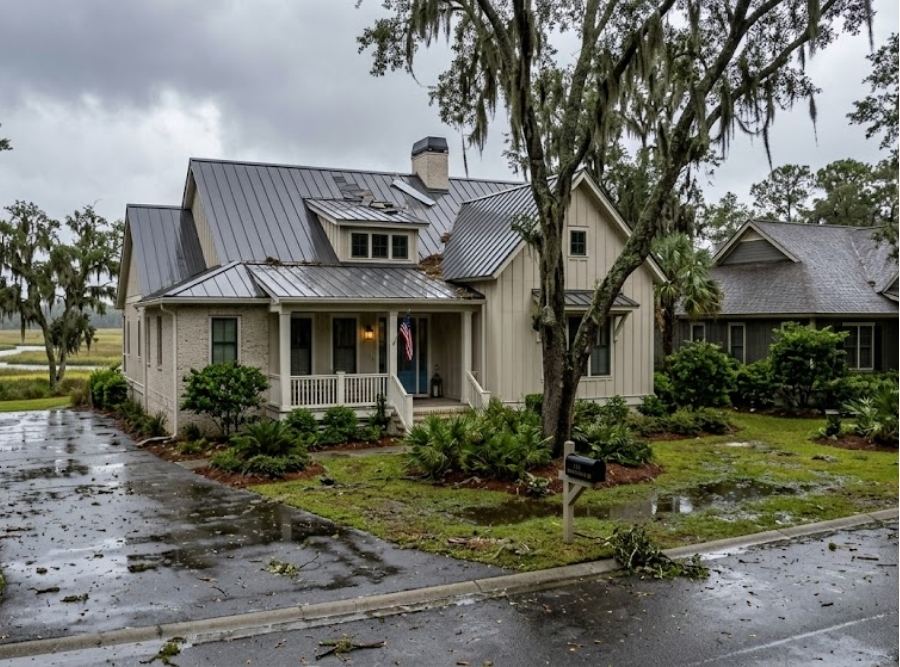
Storm activity is one of the biggest drivers. Wind, heavy rain, and hurricane systems affect Bluffton regularly, and even when a given year feels quiet, the long-term risk is still built into your premium. Roof claims are especially common, which is why wind deductibles are often higher and sometimes structured as a percentage of your home’s value rather than a flat amount.
Flooding is another factor that’s often misunderstood. Even if you’re not in a designated flood zone, insurers still evaluate proximity to water, elevation, and drainage patterns. Areas near the May River, Alljoy, and even some newer developments with tight drainage systems can hold water after sustained rain. That broader exposure influences pricing, even when flood insurance itself is a separate policy.
Rising Rebuild Costs Are Quietly Increasing Your Premium
One of the less obvious reasons premiums increase in Bluffton is the cost to rebuild your home. Construction costs across the Lowcountry have risen significantly, driven by labor shortages, material pricing, and ongoing demand from continued growth in areas like Hampton Lake, Palmetto Bluff, and Mill Creek.
We’ve reviewed policies in Bluffton where the dwelling coverage increased by $80,000 to $120,000 over a few renewal cycles without the homeowner realizing it. The premium followed that increase, but no one had clearly explained why it was happening. From the insurance company’s perspective, that adjustment is necessary to keep the home properly insured. From the homeowner’s perspective, it just feels like another unexplained increase.
Without those updates, you risk being underinsured. But without reviewing them carefully, you can end up paying more than necessary or carrying coverage that isn’t aligned with your home.
Policy Structure Can Make Your Insurance More Expensive Than It Needs to Be
Beyond location and rebuild cost, the way your policy is built plays a major role in what you’re paying. This is where we often see policies that are technically “fine” but not optimized for how the homeowner actually lives or how claims tend to play out in Bluffton.
Deductibles are a common example. Many homeowners don’t realize they have a separate wind or hurricane deductible, and that it may have increased over time. In some cases, it’s a percentage of the home’s value, which can create a much larger out-of-pocket cost during a claim than expected.
Endorsements are another key piece. Coverage for water backup, ordinance and law upgrades, or extended replacement cost can increase your premium, but they’re often necessary in a coastal environment. The issue isn’t whether these exist—it’s whether they’ve been selected intentionally and reviewed over time, or simply carried forward without much discussion.
When a policy hasn’t been reviewed properly, it’s common to see homeowners paying a higher premium while still being exposed to gaps they didn’t realize were there.
A Common Misconception About Homeowners Insurance in Bluffton
One of the biggest misconceptions we hear is that if you haven’t filed a claim, your rate shouldn’t increase. In Bluffton, that’s rarely how insurance works. Pricing is heavily influenced by regional risk, not just individual usage, so even careful homeowners can see steady increases over time.
Another misunderstanding is that being outside of a flood zone means flooding isn’t a concern. In reality, water issues in the Lowcountry often come from drainage, sustained rain, or storm surge patterns that don’t always align perfectly with flood maps. That risk still affects how policies are priced and how coverage should be structured.
There’s also a tendency to assume that a higher premium automatically means better coverage. We’ve seen situations where homeowners were paying more but still ran into limitations during a claim because of exclusions or how damage was classified. Cost and quality don’t always move together unless the policy is reviewed with intention.
This Is Where Homeowners Get Caught Off Guard
Most of the frustration around homeowners insurance doesn’t show up until there’s a claim. That’s when the gaps between expectation and policy language become clear.
A common scenario in Bluffton involves roof damage after a storm. The homeowner sees visible damage and assumes it will be covered. The insurance company evaluates the situation and determines that part of the issue is wear and tear rather than sudden damage. That distinction can significantly reduce the payout or lead to a denial.
We’ve seen this play out in neighborhoods like Rose Hill and Pinecrest, where older roofs become a point of dispute. The homeowner believes the storm caused the problem. The carrier looks at the roof’s condition before the storm and comes to a different conclusion. At that point, the issue isn’t just the claim, it’s that the policy didn’t perform the way the homeowner expected.
Premium Increases Happen Even Without Claims
It’s natural to expect that your premium would stay stable if you haven’t filed any claims, but in Bluffton, increases often come from broader market shifts. Insurance companies adjust rates based on regional performance, storm activity, and overall loss trends across the Lowcountry.
Reinsurance costs have also increased in coastal areas, which affects how carriers price their policies. When those costs rise, they’re passed down to homeowners. We’ve seen entire communities from Sun City to Hampton Hall to neighborhoods off Bluffton Parkway experience similar increases at the same time, regardless of individual claim history.
That doesn’t mean every increase is fully justified at the policy level. In many cases, it simply means the policy hasn’t been reviewed closely enough to determine whether it’s still the best fit.
What You Can Do If Your Insurance Feels Too High
If your homeowners insurance in Bluffton feels high, the first step isn’t to switch policies quickly, it’s to understand how your current one is structured. Reviewing your dwelling coverage in relation to actual rebuild cost is important, especially given how much construction pricing has changed in this area.
It’s also worth looking closely at your deductible structure, particularly for wind or hurricane coverage, and making sure it aligns with what you could realistically handle in a claim. Endorsements should be reviewed with the same level of attention to ensure they match real risks like water backup or code upgrades.
Comparing options across multiple carriers can also reveal differences in how risk is evaluated and priced. In a market like Bluffton, where conditions shift over time, having the flexibility to adjust matters more than most homeowners realize.
The Difference Between Having Insurance and Having It Set Up Right
There’s a clear difference between simply having a homeowners insurance policy and having one that’s built correctly for your situation in the Lowcountry. Most people purchase a policy and let it renew year after year without revisiting it, assuming it will continue to perform the same way.
Over time, property values increase, updates are made to the home, and risk factors evolve. Meanwhile, policy terms can change quietly in the background. Without regular review, it’s possible to end up paying more while carrying coverage that no longer fits.
This is where working with an independent agency changes the outcome. Instead of being limited to one company’s pricing and underwriting decisions, you have the ability to compare across carriers, adjust as the market shifts, and make informed decisions based on your specific situation. More importantly, you have someone reviewing the policy proactively rather than reacting after a problem shows up.
A More Grounded Way to Approach Your Insurance
Most of the issues we see aren’t because someone chose the wrong policy at the start. It’s because no one took the time to walk through it in detail as things changed over time.
High homeowners insurance premiums in Bluffton aren’t unusual, and they’re not likely to decrease in a meaningful way anytime soon. The combination of coastal exposure, growth, and rising rebuild costs makes that a consistent reality across the Lowcountry.
What can change is how your policy is structured and how often it’s reviewed. In many cases, the opportunity isn’t just to reduce cost, but to make sure the coverage actually works the way you expect it to when something happens.
If your homeowners insurance in Bluffton has been increasing or hasn’t been reviewed in a while, it’s worth taking a closer look. Not to make a quick change, but to make sure you’re not left questioning your coverage when it matters most.

Coastal Haven Insurance Partners is an independent, locally owned insurance agency located in Bluffton, SC (40 Pennington Dr Suite E). Led by partners Coley Davis, Travers Davis, and William Voelkel, the firm brings over 30 years of combined insurance and leadership experience to the South Carolina Lowcountry. The team specializes in tailored homeowners, flood, windstorm, auto, and commercial insurance. They share straightforward guidance to help coastal residents and business owners protect their assets with confidence.