
Does My Homeowners Insurance Cover Termite Damage in Beaufort, SC?
Quick Answer:
In most cases, homeowners insurance does not cover termite damage in Beaufort because it is usually considered gradual damage, pest-related damage, or a maintenance issue rather than a sudden accidental loss. If termites damage flooring, framing, trim, or structural wood over time, the repair cost is typically the homeowner’s responsibility unless a very specific covered event is involved.
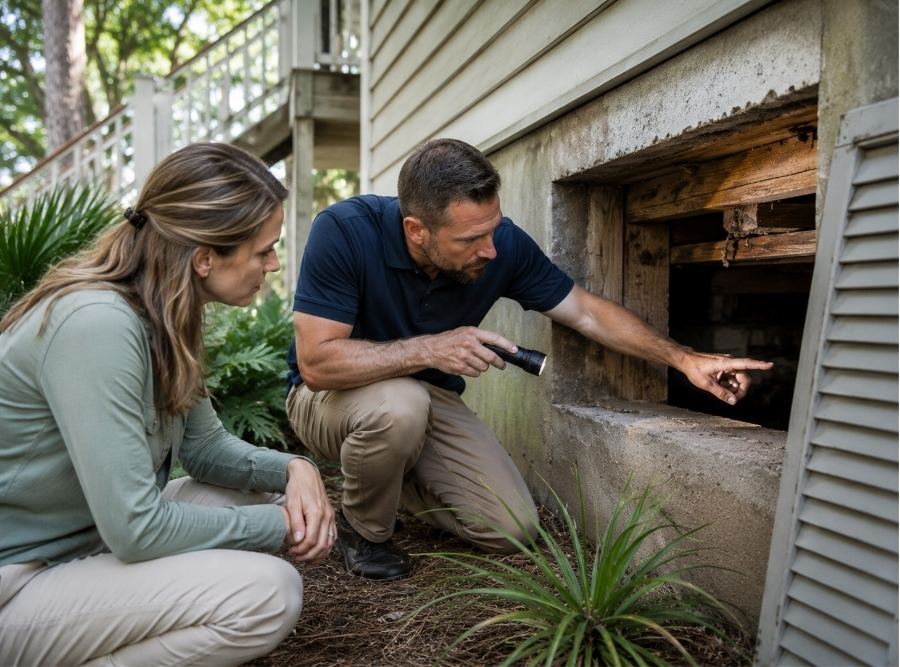
A soft spot in the floor, a door that suddenly sticks, or trim that crumbles when touched can make any Beaufort homeowner nervous. Termite damage is especially concerning because it often stays hidden until the problem has already affected subflooring, joists, sill plates, porch framing, or other structural wood.
In Beaufort and throughout the Lowcountry, termites are not a rare concern. Warm temperatures, high humidity, crawlspaces, marsh moisture, frequent rainfall, and older wood-framed homes all create conditions where termite activity can become a serious property issue. That is why many homeowners assume their insurance should help when damage is discovered.
Unfortunately, homeowners insurance is usually not designed to cover damage that happens slowly over months or years. Termite damage is one of the most common examples of a costly home problem that feels like it should be insured, but often is not.
Why Homeowners Insurance Usually Does Not Cover Termites
Homeowners insurance is generally built to respond to sudden and accidental damage, not gradual deterioration or pest activity. A fire, certain storm damage, theft, or a sudden covered water loss may fall within the purpose of a homeowners policy. Termite damage is different because it usually develops slowly and is often considered preventable through inspection, treatment, and maintenance.
That distinction can be frustrating for homeowners. From the homeowner’s perspective, the damage may feel sudden because it was discovered suddenly. From the insurance company’s perspective, the termites may have been active for months or years before the visible symptoms appeared.
This is where many claim disputes begin. A homeowner may see sagging flooring and think, “This is structural damage, so insurance should cover it.” The policy may view the same situation as long-term insect damage, which is commonly excluded.
The important takeaway is that hidden damage is not automatically covered simply because the homeowner did not know it was happening. The cause of the damage matters more than when it was discovered.
Why Termite Damage Is Such a Common Beaufort Concern
Beaufort homes face conditions that can make termite prevention especially important. High humidity, mild winters, wet crawlspaces, poor drainage, dense vegetation near foundations, and wood-to-soil contact can all create a favorable environment for termites. Older neighborhoods such as Downtown Beaufort, The Point, Old Commons, Pigeon Point, Mossy Oaks, and Spanish Point may include homes with older framing, crawlspaces, porches, and additions that deserve regular attention.
Newer homes are not immune either. Properties in Lady’s Island, Habersham, Port Royal, Shell Point, Burton, and other growing areas can still experience termite activity if moisture conditions develop or inspections are neglected. A newer home may have better construction standards, but termites are still attracted to moisture, access points, and available wood.
The Lowcountry environment also makes small maintenance issues more important. A drainage problem near the foundation, a damp crawlspace, or damaged exterior trim can create conditions that allow termite activity to go unnoticed. By the time floors begin to sag or doors begin sticking, the problem may already involve deeper structural components.
This is why termite prevention should be treated as part of long-term homeownership in Beaufort, not just something to think about during a real estate transaction.
What Most Homeowners Get Wrong About Termite Claims
One of the biggest misconceptions is that homeowners insurance covers structural damage no matter what caused it. In reality, a policy may treat structural damage very differently depending on whether it resulted from a covered sudden event or from gradual pest activity.
Another common misunderstanding is confusing a termite bond with homeowners insurance. A termite bond or treatment agreement may provide certain inspection, treatment, or repair-related benefits depending on the contract, but it is not the same thing as homeowners insurance. Homeowners sometimes assume one will automatically handle what the other does not, which can lead to expensive surprises.
We also see homeowners assume that old termite damage is not a serious issue if the infestation is no longer active. That may be true in minor cases, but old damage can still affect structural strength, resale value, inspection results, and future repair costs. In older Beaufort homes especially, old damage discovered during renovations can become a much larger project once walls, floors, or crawlspace areas are opened up.
The deeper issue is that termite damage is rarely just cosmetic. What appears to be a small area of damaged trim or soft flooring may be connected to joists, sill plates, beams, or subflooring that carry real structural loads.
When Termite Damage Becomes a Serious Financial Problem
Termite damage becomes more expensive when it is ignored or misunderstood. Early signs may be subtle: hollow-sounding wood, mud tubes, small piles of wings, bubbling paint, soft flooring, or minor cracks. Those symptoms are easy to dismiss until the damage spreads.
Once termites affect structural framing, repairs can become invasive. Flooring may need to be removed. Crawlspace framing may need reinforcement. Porches, decks, or stair structures may need partial rebuilding. If moisture problems are also present, homeowners may face both termite repairs and moisture correction at the same time.
The financial danger comes from assuming insurance will step in later. If the policy excludes termite damage, delaying inspection or treatment only allows the repair cost to grow. A problem that could have been contained early may become a much larger structural project.
For seasonal homes, rental properties, and second homes in Beaufort, the risk can be even greater because early warning signs may go unnoticed. A tenant may report a soft floor without knowing the cause. A second-home owner may miss a termite swarm. A property manager may only discover the issue during turnover or inspection.
The Right Protection Starts Before Termites Cause Damage
Because homeowners insurance usually does not cover termite damage, prevention and documentation become especially important. Regular inspections, moisture control, crawlspace maintenance, treatment plans, drainage improvements, and attention to wood-to-soil contact can all help reduce the chance of serious damage.
From an insurance perspective, the best move is understanding what your policy does and does not cover before there is a problem. That does not replace the need for pest control or structural maintenance, but it helps homeowners avoid false assumptions about where financial responsibility falls.
For Beaufort homeowners, this is part of a larger property protection mindset. Coastal homes already face wind, humidity, flood concerns, roof wear, and storm exposure. Termite prevention belongs in that same conversation because the damage can affect one of the most important parts of the home: the structure itself.
A strong homeowners insurance policy is still essential, but it should not be mistaken for a maintenance plan, pest treatment contract, or termite repair guarantee.
Don’t Wait Until the Floor Feels Soft to Ask the Hard Questions
Termite damage is one of those problems that rewards early attention and punishes delay. By the time floors sag, doors stick, or trim begins falling apart, the damage may already be deeper than it appears.
For homeowners in Beaufort and the surrounding Lowcountry, the safest approach is to treat termite protection as an ongoing responsibility. Review your homeowners insurance so you understand the exclusions, maintain regular termite inspections, address moisture issues quickly, and keep documentation of treatment and repairs.
The goal is not just avoiding a denied claim. The goal is protecting the structure of your home before a hidden problem becomes a major repair.

Coastal Haven Insurance Partners is an independent, locally owned insurance agency located in Bluffton, SC (40 Pennington Dr Suite E). Led by partners Coley Davis, Travers Davis, and William Voelkel, the firm brings over 30 years of combined insurance and leadership experience to the South Carolina Lowcountry. The team specializes in tailored homeowners, flood, windstorm, auto, and commercial insurance. They share straightforward guidance to help coastal residents and business owners protect their assets with confidence.