
Does South Carolina Require Uninsured Motorist Coverage?
Quick Answer:
Yes, South Carolina requires uninsured motorist (UM) coverage by law. It must be included in your auto policy at the same limits as your liability coverage, and you cannot remove it. This coverage protects you if you’re hit by a driver who has no insurance.
You’re reviewing your policy and see “uninsured motorist coverage” listed, and the first reaction is usually confusion. Why is this there? Can it be removed? And why are you paying for something that seems tied to someone else’s mistake?
These are fair questions, especially when you’re trying to keep your monthly premium under control. The reality is that this coverage exists for a very specific reason, and once you understand how it actually works, it tends to shift from something that feels unnecessary to something that becomes hard to overlook.
What Uninsured Motorist Coverage Actually Does
Uninsured motorist coverage exists to protect you when the at-fault driver has no insurance at all. In that situation, your policy essentially steps into the role the other driver’s insurance should have played, covering injuries and certain damages that would otherwise go unpaid.
This is fundamentally different from liability insurance. Liability coverage protects other people from you, while uninsured motorist coverage protects you from other people who fail to carry insurance. Without it, you’re left relying on your own savings or pursuing legal action against someone who likely doesn’t have the financial ability to pay.
That distinction is where most confusion starts, and it’s why this coverage matters more than it first appears.
Why South Carolina Requires It
South Carolina requires uninsured motorist coverage because uninsured drivers are still a consistent reality on the road. Even with mandatory insurance laws, there are always drivers who let policies lapse or never carry coverage in the first place.
Rather than leaving responsible drivers exposed in those situations, the state requires UM coverage as a baseline level of protection. It ensures that if you’re hit by someone without insurance, there is still a financial mechanism in place to help cover your losses.
Another important detail is that your UM limits automatically match your liability limits. This means if you carry minimum liability coverage, your protection against uninsured drivers is also set at that same minimum level.
What This Looks Like in a Real Bluffton Situation
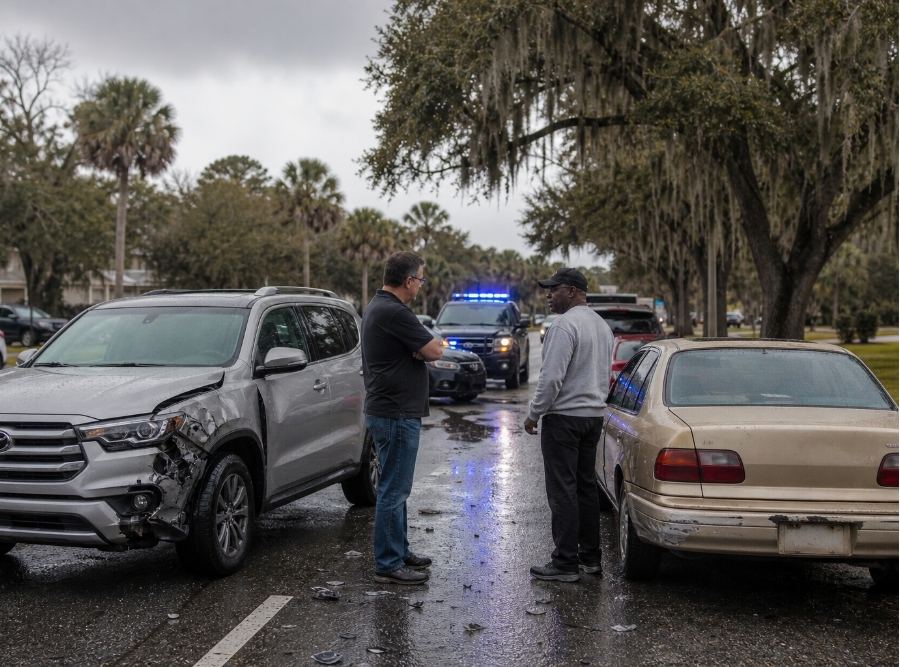
Picture a typical afternoon on US-278 heading toward Hilton Head, where traffic slows quickly and drivers are tightly spaced. One vehicle brakes suddenly, another reacts too late, and within seconds, several cars are involved. In the middle of that situation, one of the at-fault drivers turns out to have no active insurance.
At that point, your uninsured motorist coverage becomes the primary way your injuries are covered. Without it, you would be facing medical expenses and recovery costs with no clear path for reimbursement. Even if fault is obvious, collecting from an uninsured driver is rarely realistic.
This is the exact type of scenario this coverage is built for. It doesn’t depend on how careful you are, it exists because you share the road with people whose coverage may not be in place.
The Difference Between Uninsured and Underinsured (And Why It Matters)
This is where many policies quietly fall short. Uninsured motorist coverage applies when the other driver has no insurance, but it does not solve the problem when the other driver has insurance that simply isn’t enough.
That situation falls under underinsured motorist (UIM) coverage, which is optional in South Carolina. If the at-fault driver has minimum limits and those limits are exhausted quickly which is common in multi-vehicle accidents or situations involving injuries, UIM is what fills the gap.
Without UIM, you can still end up with out-of-pocket costs even though the other driver technically had insurance. This is one of the most common coverage gaps we see, especially in areas like Bluffton where accident severity and vehicle values tend to be higher.
A Common Misunderstanding: “Full Coverage Means I’m Covered”
A lot of drivers assume that having “full coverage” means they are fully protected in every situation. In reality, that term usually refers to having liability, collision, and comprehensive coverage but it doesn’t automatically mean your uninsured or underinsured protection is sufficient.
You can have what most people call “full coverage” and still be exposed in an accident involving an uninsured or underinsured driver if your limits are too low or UIM is not included. That misunderstanding often doesn’t surface until a claim happens, which is when the gap becomes very real.
Where Minimum UM Coverage Can Fall Short
If your policy is set at state minimum limits, your uninsured motorist coverage will match those limits. While that satisfies the legal requirement, it may not go very far in a serious accident.
Medical costs alone can exceed minimum limits quickly, especially if multiple people are involved or extended care is needed. In those cases, your UM coverage pays up to its limit, and anything beyond that becomes your responsibility.
This is where the difference between “having coverage” and “having enough coverage” becomes important. The presence of UM is required, but the level of protection is still a decision.
Why This Coverage Exists Whether You Want It or Not
It’s natural to question why you should carry coverage for something that depends on another driver’s behavior. The answer is that it’s not really about them, it’s about removing uncertainty from your side of the situation.
You can control how you drive, but you cannot control who you share the road with. In a state with growing traffic, mixed driving conditions, and a wide range of drivers from daily commuters to seasonal traffic that uncertainty becomes part of everyday risk.
UM coverage is designed to close that gap. It ensures that your ability to recover financially after an accident doesn’t depend on whether the other driver made responsible choices.
What This Means When You Look at Your Policy
Uninsured motorist coverage is one of those parts of a policy that tends to be overlooked because it’s required and not always clearly explained. But when you step back and look at how often accidents involve uninsured or underinsured drivers, it becomes one of the more important protections you carry.
If you’re not sure what your UM limits are, or if you’ve never looked at how they compare to your overall exposure, it’s worth reviewing. The goal isn’t just to meet the requirement, it’s to make sure the coverage would actually hold up in a real situation.
At Coastal Haven Insurance, we take the time to walk through these details in plain terms and compare options across multiple carriers. That way, you understand not just what your policy includes, but how it performs when something actually happens here in the Lowcountry.

Coastal Haven Insurance Partners is an independent, locally owned insurance agency located in Bluffton, SC (40 Pennington Dr Suite E). Led by partners Coley Davis, Travers Davis, and William Voelkel, the firm brings over 30 years of combined insurance and leadership experience to the South Carolina Lowcountry. The team specializes in tailored homeowners, flood, windstorm, auto, and commercial insurance. They share straightforward guidance to help coastal residents and business owners protect their assets with confidence.