My Hilton Head Homeowners Insurance Was Non-Renewed or Cancelled — What Are My Options?
Quick Answer:
If your homeowners insurance was cancelled or non-renewed in Hilton Head, you may still have options through other carriers, specialty coastal markets, or updated coverage structures. The most important step is acting quickly before your policy expires, especially if your home has coastal exposure, an older roof, vacation rental usage, or pending mortgage requirements.
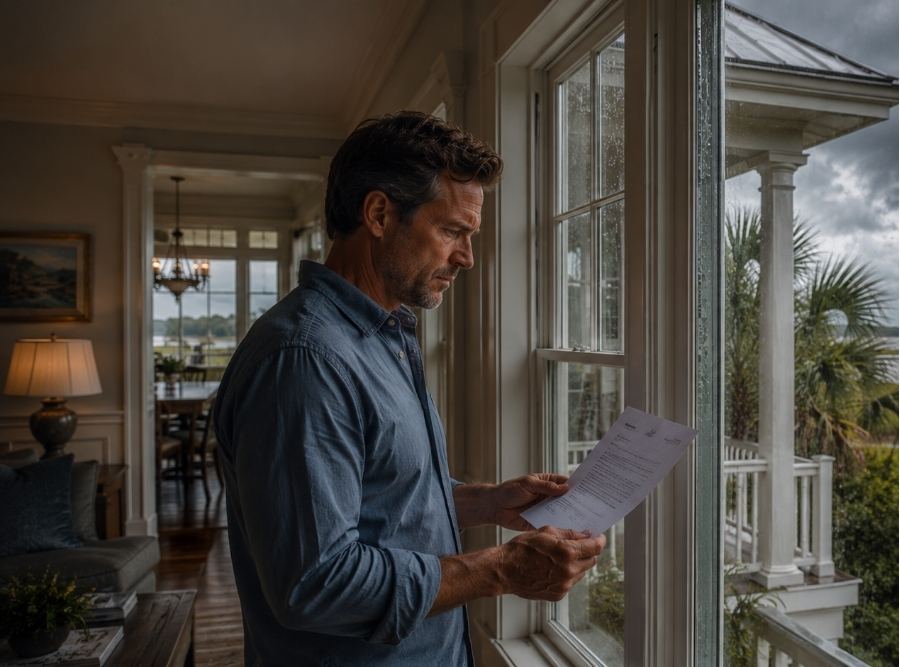
A lot of Hilton Head homeowners open these letters thinking there has to be some kind of mistake. You may have had the same insurance company for years, never filed a major claim, and suddenly receive a notice saying your policy is being non-renewed or cancelled. In many cases, the issue is not a single event. It is the result of how insurance companies are reevaluating coastal risk across Hilton Head Island and the South Carolina Lowcountry.
We regularly speak with homeowners in Sea Pines, Hilton Head Plantation, Palmetto Dunes, Forest Beach, Shipyard, Port Royal, and Bluffton who are dealing with this exact situation. Some were told their roof is too old. Others were flagged after an inspection. Some learned their carrier is reducing exposure to coastal homes altogether. The situation can feel overwhelming, especially when the renewal deadline is approaching quickly or a mortgage company starts sending urgent notices.
The good news is that a non-renewal does not automatically mean your home is uninsurable. It does mean the situation needs immediate attention, a careful review of the underwriting issue, and a realistic understanding of what options may still be available.
Why This Is Happening More Often in Hilton Head and Coastal South Carolina
Many homeowners assume they were singled out unfairly, but a large part of what is happening right now is tied to broader changes in the coastal insurance market. Insurance carriers across South Carolina’s coast have become far more cautious about wind exposure, roof condition, storm losses, rebuilding costs, and long-term profitability in hurricane-prone areas.
What many homeowners do not realize is that some non-renewals have less to do with the individual homeowner and more to do with how carriers are reshaping their overall coastal exposure. In practical terms, that means a home that qualified easily several years ago may no longer fit a company’s current underwriting guidelines even if nothing dramatic has changed about the property itself.
Hilton Head presents a unique combination of insurance pressures. The island contains a large number of older coastal homes, vacation properties, short-term rentals, marshfront homes, golf community properties, and high-value custom builds. Areas like Sea Pines, Forest Beach, Port Royal, and older villa communities often contain homes from the 1970s through 1990s that are now facing stricter scrutiny related to roofs, plumbing systems, exterior condition, and wind vulnerability.
At the same time, rebuilding costs on Hilton Head have increased substantially. Labor shortages after storms, limited island access, architectural requirements within gated communities, and the rising cost of materials have made large coastal claims significantly more expensive for insurers. Carriers are responding by tightening underwriting guidelines, increasing deductibles, reducing coastal concentration, and becoming more selective about which properties they are willing to insure.
This is why homeowners increasingly hear phrases like “carrier appetite changes,” “coastal restrictions,” or “underwriting concerns.” Those terms may sound vague, but they usually point to a very specific issue involving roof age, property condition, occupancy, prior claims, or overall coastal exposure.
Understanding the Difference Between Cancellation and Non-Renewal
One of the first things homeowners need to understand is whether the policy was cancelled or simply non-renewed. While both situations create urgency, they are not technically the same.
A cancellation generally happens during the active policy term. A non-renewal means the carrier has decided not to continue coverage when the current term expires. From the homeowner’s perspective, the distinction often feels irrelevant because both situations require replacement coverage before a deadline. What matters more is understanding the actual reason behind the decision.
In coastal South Carolina, we commonly see non-renewals connected to older roofs, inspection findings, deferred maintenance, prior water claims, or changes in how a carrier evaluates wind and hurricane exposure. Vacation homes and short-term rentals can also create additional underwriting concerns because part-time occupancy may increase the risk of delayed maintenance issues or unnoticed water damage.
We also regularly see confusion surrounding inspection-driven non-renewals. A homeowner may believe the house “looks fine,” while an insurance underwriter sees signs of elevated risk. Overhanging tree limbs, deteriorating siding, worn roofing materials, missing handrails, moisture intrusion, patch repairs, or visible exterior wear can all influence underwriting decisions, especially in coastal environments where salt air, humidity, and wind exposure accelerate deterioration over time.
The important thing is not panicking or assuming the property is permanently uninsurable. One carrier’s underwriting decision does not automatically represent every available market.
What Insurance Companies Are Actually Looking At
Homeowners are often surprised by how detailed underwriting reviews have become in Hilton Head and Bluffton. Many carriers now request roof photos, exterior inspections, updated replacement cost calculations, occupancy verification, or repair documentation before renewal. In some cases, homeowners receive these requests after years of uninterrupted coverage.
Roof age remains one of the biggest triggers. Even if a roof is not actively leaking, insurers may still view it as a higher storm-loss risk if it exceeds the company’s preferred age guidelines. Older roofs with visible patch repairs, granular loss, curling shingles, or incomplete documentation tend to create additional concern. In communities like Hilton Head Plantation, Moss Creek, and Port Royal, this issue appears frequently because many homes were built decades ago and may still contain aging roofing systems.
Insurance companies are also evaluating how the property is used. Vacation homes, short-term rentals, and seasonal properties face different underwriting considerations than primary residences. In areas like Palmetto Dunes, Sea Pines, and Forest Beach, carriers may ask questions about occupancy, rental frequency, property management, and maintenance oversight. Homes that sit vacant for extended periods can experience delayed leak detection, HVAC failures, or unnoticed storm damage, all of which increase potential claim severity.
Another factor many homeowners overlook is replacement cost. Coastal construction costs have increased dramatically across Hilton Head Island and Bluffton. Luxury finishes, HOA architectural requirements, elevated foundations, custom materials, and post-storm contractor shortages all influence how expensive a home may be to rebuild after a major loss. In some situations, the home itself may still be insurable, but the carrier no longer wants that level of exposure in a coastal ZIP code.
What You Should Do Immediately After Receiving the Notice
One of the biggest mistakes homeowners make is waiting too long to act. A policy that feels manageable 45 days before expiration can become much harder to replace when only a few days remain, especially during hurricane season.
The first step is reading the notice carefully and identifying the exact underwriting concern. Many homeowners skim the letter without realizing it contains critical information about roof requirements, inspection findings, repair deadlines, or eligibility restrictions. Understanding the actual issue is extremely important because it helps determine whether the situation may be improved through repairs, updated documentation, or alternative market placement.
You should also gather all relevant insurance and property information early in the process. That typically includes the current declarations page, inspection reports, roof documentation, repair invoices, claims history, and any records showing updates to the property. Homeowners sometimes unintentionally create additional problems by guessing roof age or leaving occupancy details unclear on applications. Carriers increasingly verify this information through inspection vendors, aerial imagery, permit records, and prior underwriting data.
It is also important not to assume an online quote automatically means coverage is active or fully approved. We regularly see homeowners purchase policies quickly without realizing certain coverages were excluded, wind deductibles changed substantially, or underwriting approval was still pending. Coastal properties often require a much more careful review than standard inland homes.
The earlier the process begins, the more options homeowners usually have available. Waiting until the final week often leads to fewer carriers, higher deductibles, higher premiums, and rushed decisions that may not fully protect the property.
What Happens If Coverage Lapses
Allowing a homeowners policy to expire without replacement coverage can create serious financial and logistical problems, particularly in a coastal market like Hilton Head where storm exposure remains a constant concern.
Mortgage companies generally require continuous insurance coverage. If a lender discovers the policy expired, they may purchase lender-placed insurance on the homeowner’s behalf. Many people assume this solves the problem, but lender-placed insurance is typically designed to protect the lender’s financial interest first, not the homeowner’s broader needs. Personal property coverage, liability protection, loss-of-use coverage, and other important protections may be limited or missing altogether.
The cost can also be substantially higher than traditional homeowners coverage. Once force-placed insurance is added, homeowners often lose control over both pricing and coverage structure. In addition, if a named storm is approaching, some carriers may temporarily suspend binding new coastal policies, which can create an extremely stressful situation for anyone still searching for coverage late in the process.
This becomes especially dangerous for vacation homes, short-term rentals, seasonal properties, and homes with unresolved repairs or active claims. We sometimes see out-of-state owners in Sea Pines or Palmetto Dunes miss early warning signs because notices were mailed to another residence or routed through property managers. By the time the urgency becomes clear, the expiration date may only be days away.
The situation is stressful, but it is usually far more manageable when addressed early.
Why Working With an Independent Agency Matters in Coastal Markets
One of the most important realities of coastal insurance is that underwriting conditions can change quickly. A carrier that was highly competitive in Hilton Head several years ago may now be restricting coastal exposure, tightening roof guidelines, or reducing eligibility for certain property types. That is one reason why independent agencies play such an important role in coastal insurance planning.
An independent agency is not tied to a single insurance company’s underwriting system. When one carrier changes direction, there may still be other standard, specialty, or coastal-focused markets worth evaluating. The goal should not simply be finding the fastest replacement policy possible. The goal is finding coverage that realistically fits the property, occupancy, exposure level, and long-term insurability concerns.
That process often involves reviewing far more than just premium pricing. Wind and hail deductibles, roof settlement terms, flood coordination, actual cash value limitations, replacement cost accuracy, liability protection, and rental exposures all matter significantly in coastal South Carolina. We regularly see homeowners focus entirely on replacing the policy quickly without realizing the new coverage may exclude or limit some of the risks they are most concerned about.
A thoughtful review can make an enormous difference, especially for older homes, second homes, waterfront properties, and vacation rentals throughout Hilton Head and Bluffton.
The Bigger Picture Most Homeowners Miss
Many homeowners assume insurance only needs attention when a premium increases or a cancellation letter arrives. In reality, coastal properties benefit from ongoing reviews long before problems develop.
Homes change over time. Roofs age. Rental usage shifts. Carriers update underwriting guidelines. Replacement costs increase. Renovations happen without documentation being updated. What fit a carrier’s guidelines five years ago may no longer fit today’s coastal insurance environment.
This is especially true across Hilton Head Island where weather exposure, rebuilding costs, tourism-driven occupancy patterns, and coastal regulations create a far more dynamic insurance environment than many inland markets. The strongest insurance strategy is usually proactive rather than reactive.
We often tell homeowners that the best time to address potential insurance concerns is before the non-renewal notice arrives.
The Earlier You Address This, The More Options You Usually Have
If your Hilton Head homeowners insurance was cancelled or non-renewed, it does not necessarily mean you are out of options. In many cases, the situation can still be resolved through updated documentation, repairs, alternative carriers, specialty coastal markets, or a more thorough review of the property’s actual underwriting profile.
The key is acting early, understanding what the carrier is truly concerned about, and avoiding rushed decisions driven by panic or deadlines. Coastal insurance has become more complicated across Hilton Head, Bluffton, and the surrounding Lowcountry, particularly for older homes, vacation properties, waterfront homes, and rental properties. Having someone explain the situation clearly and review multiple options can make the process far less overwhelming.
If you recently received a cancellation or non-renewal notice and need help understanding your options, Coastal Haven Insurance can review the situation with you, explain what carriers may be looking at, and help you evaluate realistic paths forward without pressure.
Coastal Haven Insurance Partners is an independent, locally owned insurance agency located in Bluffton, SC (40 Pennington Dr Suite E). Led by partners Coley Davis, Travers Davis, and William Voelkel, the firm brings over 30 years of combined insurance and leadership experience to the South Carolina Lowcountry. The team specializes in tailored homeowners, flood, windstorm, auto, and commercial insurance. They share straightforward guidance to help coastal residents and business owners protect their assets with confidence.