
Do I Need Golf Cart Insurance in Bluffton SC?
Quick Answer:
Yes — in many situations, golf cart insurance is a smart and sometimes necessary form of protection in Bluffton, South Carolina. If your golf cart is driven on neighborhood roads, used regularly in communities like Sun City or Palmetto Bluff, operated by family members or guests, or registered for street-legal use, homeowners insurance alone may not fully protect you from liability, damage, theft, or accident-related costs.
In Bluffton, golf carts stopped being “just for the golf course” a long time ago.
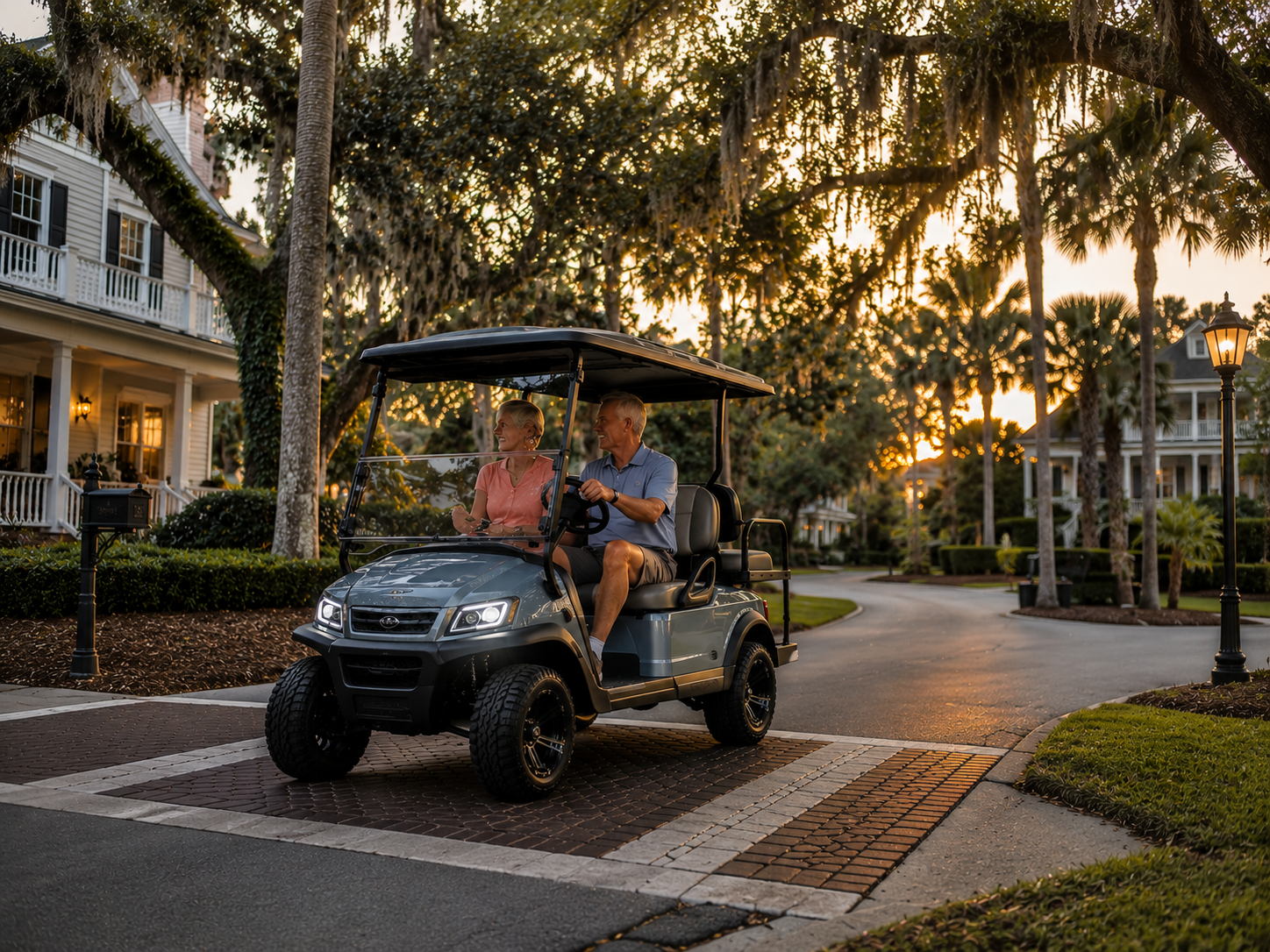
They are used for neighborhood visits in Sun City, short trips around Hampton Hall, evening rides through Palmetto Bluff, family trips to community pools in New Riverside, and quick errands inside golf-oriented communities throughout Bluffton and Okatie. In many neighborhoods across the Lowcountry, golf carts now function more like secondary vehicles than recreational equipment.
That shift is exactly why golf cart insurance has become a much more serious conversation in recent years.
At Coastal Haven Insurance, we regularly speak with Bluffton-area residents who are surprised to learn their homeowners insurance may not fully cover roadway accidents, passenger injuries, theft losses, or liability claims involving golf carts. Many owners assume coverage automatically follows the cart everywhere simply because it is smaller and slower than a traditional vehicle.
Unfortunately, that assumption is where many expensive coverage gaps begin.
In Bluffton, Golf Carts Often Become Second Vehicles
Golf cart usage in Bluffton is very different from occasional golf-course-only use.
Communities throughout Bluffton, Hilton Head, Okatie, and Beaufort County have seen golf carts become part of everyday transportation. In neighborhoods like Sun City Hilton Head, Belfair, Moss Creek, Rose Hill, and Hampton Lake, carts are routinely used for social visits, restaurants, fitness centers, golf clubs, neighborhood gatherings, and local transportation within gated communities.
For many residents, especially retirees and full-time community residents, the golf cart becomes integrated into daily life faster than expected.
That lifestyle shift changes the insurance exposure significantly.
Many modern golf carts also cost far more than people realize. Custom carts now regularly include lithium battery systems, upgraded wheels, lift kits, premium seating, enclosures, LED lighting packages, sound systems, custom paint, and street-legal modifications. Some high-end carts throughout Bluffton and Hilton Head rival the cost of compact vehicles.
At the same time, Bluffton’s growth has increased traffic exposure substantially. Congestion around Highway 278, Buckwalter Parkway, Bluffton Parkway, and neighborhood connector roads has made interactions between golf carts, pedestrians, cyclists, and vehicles far more common than they were years ago.
From a liability standpoint, many golf carts in Bluffton now operate much closer to neighborhood vehicles than recreational equipment.
Does Homeowners Insurance Cover Golf Carts?
Sometimes — but usually not in the way many owners assume.
This is one of the biggest misunderstandings surrounding golf cart insurance in South Carolina. Many homeowners policies provide limited protection for golf carts under very specific circumstances, particularly when the cart is used on the insured property itself or strictly for golf-course purposes.
The problem begins once usage expands beyond those narrow situations.
Driving through neighborhoods, crossing roads, transporting guests, allowing teenagers to operate the cart, or using it regularly throughout community streets can create liability situations that may not be fully covered under a standard homeowners policy.
This is often where Bluffton residents get caught off guard after accidents.
We regularly see situations where someone assumed their homeowners insurance handled everything, only to discover the policy excluded roadway liability exposure or provided only limited protection once the golf cart left private property.
Most golf cart owners do not think seriously about liability exposure until someone gets hurt, a parked vehicle is damaged, or an insurance company starts explaining what the homeowners policy does not cover.
That confusion becomes even more common in communities where golf carts feel completely normal. When everyone around you uses golf carts casually every day, it is easy to assume the insurance side must be simple too.
In reality, golf cart coverage often needs to be evaluated much more carefully than people expect.
Street-Legal Golf Carts and Neighborhood Golf Carts Are Not Always Treated the Same
This is another area where Bluffton residents frequently run into confusion.
South Carolina allows certain golf carts and low-speed vehicles to operate legally on qualifying roads if they meet specific registration, equipment, and operational requirements. Depending on classification, a street-legal cart may require headlights, brake lights, mirrors, reflectors, registration documentation, and liability coverage.
The important distinction is that once a golf cart begins functioning more like a roadway vehicle, the liability exposure changes dramatically.
Many Bluffton and Hilton Head residents use carts for short-distance transportation between neighborhoods, restaurants, amenities, and community areas connected by local roads. Even relatively low-speed accidents can still create serious passenger injury claims, pedestrian liability exposure, vehicle damage disputes, and expensive legal complications that many owners never anticipated when they first purchased the cart.
A golf cart offers very little physical protection compared to a standard vehicle. Even minor collisions can lead to significant injuries, especially involving children, older passengers, or pedestrians.
This is one reason many HOAs and gated communities increasingly request proof of insurance from residents operating golf carts within neighborhood areas.
What Happens if Someone Wrecks Your Golf Cart?
This is usually the moment when insurance suddenly becomes very real for owners.
A teenager clips a parked vehicle while driving through the neighborhood. A guest accidentally overturns the cart during an evening ride. Someone falls from the passenger seat during a sharp turn. A cart collides with a cyclist or pedestrian crossing a community roadway.
These situations happen more often than many people realize throughout Bluffton-area communities.
And unlike traditional vehicles, golf carts provide very little crash protection. Passengers are often sitting sideways, riding without restraints, or traveling in open-air vehicles with minimal structural protection. Injuries frequently become more serious than owners initially expect.
We have seen situations where the property damage itself remained relatively manageable while the medical liability exposure became much larger. Passenger injuries, guest liability, and pedestrian claims can escalate quickly after even low-speed incidents.
This becomes even more complicated when the golf cart is regularly operated by multiple family members, teenagers, guests, or visiting relatives. Shared usage often creates confusion around responsibility, permissions, and insurance coverage expectations.
Many people assume the accident “was just around the neighborhood.” Unfortunately, liability claims rarely stay small simply because the vehicle itself is smaller.
Can Teenagers Drive Golf Carts in Bluffton?
This is one of the fastest-growing concerns we hear from families throughout Bluffton communities.
In neighborhoods where golf carts are common, it becomes easy for parents and grandparents to view them as relatively harmless compared to traditional vehicles. Teenagers and younger drivers often operate carts casually around neighborhoods, community amenities, golf paths, and local streets.
But golf carts still interact with traffic, pedestrians, parked vehicles, cyclists, intersections, and roadway crossings every single day.
Teen drivers often lack experience judging turns, braking distance, nighttime visibility, passenger safety, and roadway interactions. The exposure increases further when carts are modified with lift kits or speed upgrades that affect stability and handling.
Even inside gated communities, accidents involving inexperienced drivers can create major liability concerns very quickly.
We regularly speak with Bluffton-area families who only begin asking serious insurance questions after a close call, near miss, or accident involving younger drivers.
Why Golf Cart Risks Are Different in Bluffton
Golf cart risks in Bluffton are very different from occasional recreational use in many other areas.
The combination of gated communities, retirement developments, golf-oriented neighborhoods, coastal weather, and year-round outdoor living has created one of the most golf-cart-oriented lifestyles in South Carolina.
Communities like Sun City Hilton Head, Hampton Hall, Belfair, Berkeley Hall, and Palmetto Bluff all experience heavy neighborhood golf cart activity. Many residents use carts daily rather than occasionally.
That frequency increases exposure substantially.
Bluffton also presents unique environmental risks. Coastal humidity, salt air, standing water, heavy rain, tropical storms, and hurricane season all create potential damage concerns for golf carts stored outdoors or used regularly near marsh-adjacent areas.
We regularly see golf carts develop electrical corrosion, water intrusion problems, battery-system damage, and expensive storm-related repair issues after Bluffton’s heavy rain events and hurricane seasons.
And because many carts now include expensive upgrades, repair costs can become far larger than expected.
Hurricane Season Creates Risks Many Golf Cart Owners Overlook
Most people think about protecting their homes during hurricane season. Far fewer think seriously about protecting their golf carts.
Throughout Bluffton and the Lowcountry, tropical storms and hurricanes regularly create flooding, standing water, storm debris, and saltwater intrusion risks. Golf carts stored in garages, driveways, carports, or outdoor storage areas can sustain severe damage even during relatively moderate storm events.
Battery systems are particularly vulnerable to water exposure. Modern lithium battery replacements can cost thousands of dollars alone, and saltwater intrusion often creates long-term electrical reliability problems even after visible water recedes.
Seasonal residents and second-home owners face additional exposure because carts may sit unattended during major weather events.
We have seen situations where golf cart owners assumed storm damage would automatically fall under another policy, only to discover there were major limitations or exclusions after the loss occurred.
That is one reason reviewing golf cart coverage before hurricane season matters much more in Bluffton than many owners realize.
What Golf Cart Insurance Typically Covers
Dedicated golf cart insurance can help provide protection that many homeowners policies either limit heavily or exclude altogether.
Depending on the policy structure, coverage may help with liability exposure involving injuries or property damage, physical damage to the golf cart itself, theft, vandalism, storm-related losses, passenger injuries, and expensive custom upgrades or accessories.
This becomes especially important in coastal South Carolina where golf carts face constant exposure to humidity, salt-air corrosion, tropical weather, standing water, and electrical-system wear.
Custom modifications create another major underinsurance problem. Lift kits, custom wheels, upgraded seating, enclosures, premium lighting systems, sound systems, and lithium battery upgrades may not automatically be covered unless the policy is structured correctly.
Golf cart insurance should not simply be treated as a checkbox purchase. The way the cart is actually being used matters tremendously.
The Bigger Insurance Problem Usually Starts With “We Only Use It Around the Neighborhood”
The greatest risk with golf carts is often how normal they feel.
People become comfortable because they see golf carts everywhere throughout Bluffton communities. Neighbors wave while driving past. Kids ride in them constantly. Guests borrow them casually during visits. Eventually, it stops feeling like operating a vehicle at all.
That familiarity creates a false sense of reduced risk.
We have seen many situations where the real problem was not the golf cart itself. It was the assumption that nothing serious could happen because the trip was short, local, or inside the neighborhood.
Unfortunately, liability claims do not always stay small simply because the vehicle is smaller.
At Coastal Haven Insurance, we help Bluffton-area residents review how their golf carts are actually being used, identify where homeowners coverage may fall short, and structure protection that better matches real-world exposure.
If your golf cart is becoming part of your everyday transportation, carries passengers regularly, includes expensive upgrades, or operates beyond golf-course-only use, it is worth reviewing whether your current insurance truly matches how the cart is being used today.

Coastal Haven Insurance Partners is an independent, locally owned insurance agency located in Bluffton, SC (40 Pennington Dr Suite E). Led by partners Coley Davis, Travers Davis, and William Voelkel, the firm brings over 30 years of combined insurance and leadership experience to the South Carolina Lowcountry. The team specializes in tailored homeowners, flood, windstorm, auto, and commercial insurance. They share straightforward guidance to help coastal residents and business owners protect their assets with confidence.