
How Does a Wind Deductible Work in South Carolina and What Does 3% Actually Mean?
Quick Answer:
A 3% wind deductible in South Carolina usually means you are responsible for 3% of your home’s Coverage A dwelling limit, not 3% of the repair bill. If your home is insured for $400,000 under Coverage A, a 3% deductible equals $12,000. The deductible applies only when the type of wind, hurricane, or named-storm event described in your policy triggers it, so the declarations page and deductible endorsement should be reviewed carefully.
Why Wind Deductibles Surprise South Carolina Homeowners
It usually does not come up until something goes wrong.
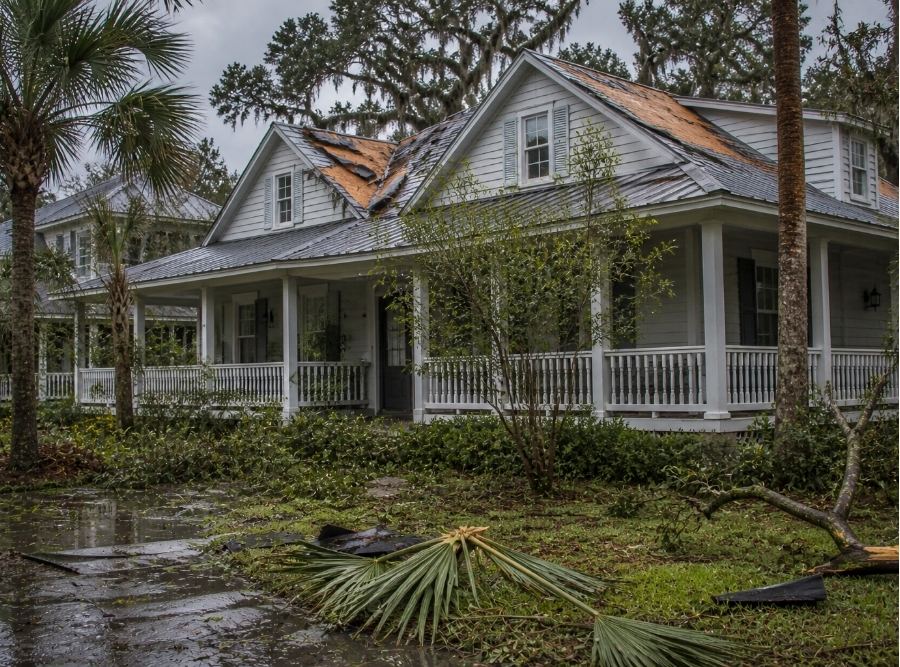
A storm moves through Bluffton, damage appears on the roof or siding, and a claim is filed with the expectation that insurance will step in. Then the estimate comes back, and the deductible changes the outcome in a way the homeowner did not expect.
We have had that conversation with homeowners throughout Bluffton, from older homes near Old Town and Edgefield to newer properties in New Riverside and off Buckwalter Parkway.
In many cases, the issue is not that coverage does not exist. The problem is that the deductible was never translated into real dollars before the storm occurred.
Seeing “3%” on a declarations page is one thing. Understanding what it could mean during a claim is something entirely different.
Why Coastal Insurance Doesn’t Work Like Inland Policies
Insurance in coastal South Carolina is built around a different set of realities than inland coverage. In Bluffton, storm exposure isn’t occasional, it’s expected. Hurricanes, tropical systems, and sustained wind events affect entire regions at once, which creates a different level of financial risk for insurance companies.
Because of that, insurers don’t structure policies the same way they would in lower-risk areas. Instead of relying on flat deductibles, they use percentage-based deductibles to distribute that risk across policyholders. This approach shifts a meaningful portion of the initial loss to the homeowner, especially during large-scale events that impact many properties simultaneously.
From a technical standpoint, this is a form of risk-sharing. From a homeowner’s perspective, it means the deductible is no longer a minor detail, it becomes one of the most important parts of how your policy actually performs when you need it.
What 3% Really Means When You Put It Into Real Dollars
The most important detail to understand is that the percentage applies to the insured value of your home, not the cost of the damage. That insured value Coverage A on your policy is what drives the deductible calculation every time.
For a $300,000 home, a 3% deductible equals $9,000. For a $400,000 home, it equals $12,000. For a $500,000 home, it becomes $15,000. As home values increase across Bluffton, especially in communities like Hampton Hall, Belfair, and Palmetto Bluff, that same percentage creates a much larger financial starting point.
What 3% Looks Like at Different Home Values
- $300,000 home → $9,000 deductible
- $400,000 home → $12,000 deductible
- $500,000 home → $15,000 deductible
- $700,000 home → $21,000 deductible
We’ve seen homeowners assume that 3% meant a portion of the repair cost, only to realize during a claim that it applied to the full insured value. That moment tends to reset expectations quickly, because what seemed manageable on paper becomes a significant out-of-pocket responsibility.
What Actually Happens When a Storm Claim Is Filed
The way the deductible is applied is just as important as how it’s calculated. Many homeowners expect insurance to begin paying immediately and then account for the deductible afterward. In reality, the deductible is applied first, and only the remaining amount is considered for coverage.
If the total damage does not exceed the deductible, there is no payout. This is one of the most important and often overlooked realities of wind deductibles. A $10,000 repair may feel significant, but if the deductible is $12,000, the entire cost falls on the homeowner.
Even when the damage exceeds the deductible, the out-of-pocket portion remains substantial. A $25,000 claim with a $12,000 deductible still leaves a large gap before insurance covers the remaining portion. This is why many homeowners feel like insurance “isn’t paying much,” when in reality the policy is working exactly as it was structured.
In Bluffton, it’s not unusual for a wind deductible to be the largest out-of-pocket expense a homeowner faces after a storm.
Why the Type of Storm Can Change Everything
Not every wind event is treated the same under a South Carolina homeowners policy. Many policies distinguish between general wind damage and damage caused by a named storm, such as a hurricane or tropical storm. That classification determines which deductible applies.
When a storm is officially named, the percentage-based deductible is typically triggered. For smaller wind events, a different deductible may apply depending on the policy. This layered structure adds complexity, especially when homeowners don’t realize the difference until a claim is already in progress.
The challenge is that this distinction often feels theoretical during a policy review. It only becomes real when a storm event activates that portion of the policy, and by then, the financial impact is already in motion.
Where Most Homeowners Misunderstand the Deductible
One of the most common misconceptions is that a 3% deductible means insurance will cover the remaining 97% of the damage. In reality, the deductible simply sets the threshold before coverage begins, and what happens after that depends on coverage type, depreciation, and how the claim is evaluated.
There is also confusion around how often the deductible applies. Many homeowners assume it applies once per year, but in coastal policies, it often applies per storm event. During an active hurricane season, that can mean multiple deductibles if separate storms cause damage.
We’ve also seen cases where policies were changed at renewal from a flat deductible to a percentage-based structure without the homeowner fully realizing the impact. The premium may not shift dramatically, but the risk structure does, and that difference becomes clear only when a claim occurs.
What Happens When This Isn’t Understood Ahead of Time
The pattern is consistent. A storm hits, damage is discovered, and a claim is filed with the expectation that insurance will handle most of the cost. When the estimate comes back, the deductible changes the outcome in a way that feels unexpected.
We’ve seen Bluffton homeowners delay repairs because the deductible was higher than anticipated. In a humid coastal environment, that delay can quickly turn a manageable issue into something more serious. Water intrusion, heat, and moisture can lead to mold, interior damage, and structural concerns that increase the overall cost significantly.
At a certain point, the conversation shifts from “what does my deductible mean” to “am I prepared to cover that amount if a storm hits?” That’s where understanding the structure of the policy becomes just as important as the coverage itself.
What This Means If You Own a Home in Bluffton
Living in Bluffton means dealing with a different insurance structure than many homeowners are used to. Storm exposure is part of the environment, and policies are designed around that reality. The wind deductible is one of the clearest ways that difference shows up.
Homes closer to the May River or in more exposed areas may carry higher percentage deductibles or stricter underwriting guidelines. Newer homes in areas off Buckwalter or New Riverside may have slightly more flexibility depending on the carrier, but the overall structure remains consistent.
The deductible isn’t just a technical detail. It’s a financial planning consideration that directly affects how quickly you can respond to damage and how much responsibility you carry after a storm.
The Difference Between Seeing the Number and Planning Around It
Most homeowners have seen the percentage listed on their policy. Far fewer have translated that number into actual dollars and considered what it means in a real scenario. That gap is where most of the disconnect happens.
This is where working with an independent agency changes the conversation. Instead of just reviewing policy language, you’re able to walk through real-world examples, compare deductible structures, and evaluate how different options affect both premium and out-of-pocket risk. Because we’re not tied to a single carrier, we can adjust that structure as your situation changes.
The goal isn’t just to understand your policy. It’s to make sure it aligns with what you’re realistically prepared to handle.
A Practical Way to Think About It Before the Next Storm
Most of the issues we see with wind deductibles don’t come from bad policies. They come from a lack of clarity before the policy is ever tested. In a place like Bluffton, where storms are part of the environment, that clarity becomes essential.
The deductible isn’t just a number, it’s the part of the policy you’re most likely to feel. Understanding it ahead of time doesn’t just prevent surprises. It changes how prepared you are when the next storm moves through Bluffton.
If you’re not sure what your wind deductible actually means in dollars or how it would apply after a storm, it’s worth walking through it before storm season, not after. That level of understanding tends to make a meaningful difference when it matters most.

Coastal Haven Insurance Partners is an independent, locally owned insurance agency located in Bluffton, SC (40 Pennington Dr Suite E). Led by partners Coley Davis, Travers Davis, and William Voelkel, the firm brings over 30 years of combined insurance and leadership experience to the South Carolina Lowcountry. The team specializes in tailored homeowners, flood, windstorm, auto, and commercial insurance. They share straightforward guidance to help coastal residents and business owners protect their assets with confidence.