How Does Living in a Gated Plantation Community Affect My Car Insurance Rates in Hilton Head?
Quick Answer:
Living in a gated plantation community in Hilton Head may influence your car insurance rates, but it typically does not create an automatic or dramatic discount on its own. Insurance companies consider many factors beyond neighborhood security, including vehicle value, driving history, annual mileage, local weather risks, claims trends, and how the vehicle is actually used.
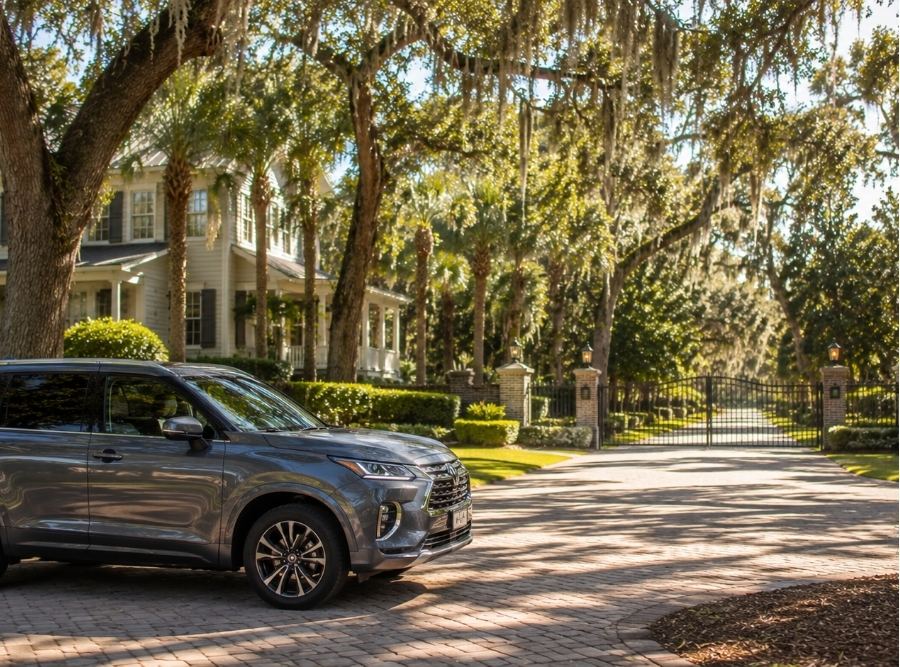
Many people move to Hilton Head communities such as Sea Pines, Hilton Head Plantation, Palmetto Dunes, Long Cove, Wexford, Port Royal Plantation, and Indigo Run expecting certain aspects of life to change. The pace is often different, traffic may be lighter, golf carts become part of daily transportation, and security gates create a greater sense of privacy and control. It’s only natural for homeowners to wonder whether those same factors should also reduce their auto insurance premiums.
The answer is more complicated than most people expect. While gated communities can influence certain aspects of risk, insurance companies evaluate dozens of factors when determining rates. In many cases, the things homeowners assume matter most actually have less influence than vehicle usage, mileage, driver characteristics, and the realities of living in a coastal environment. Understanding how insurers view these communities can help explain why moving behind a gate doesn’t always produce the savings people expect.
The Security Gate Matters Less Than Most People Think
One of the most common misconceptions among Hilton Head residents is that living behind a security gate automatically leads to significantly lower auto insurance rates. On the surface, that assumption makes perfect sense. Gated communities typically experience less through traffic, controlled access points, private roads, and additional security measures that can make residents feel more protected.
Insurance companies certainly recognize that these features may influence certain types of risk. However, they rarely evaluate a gated entrance in isolation. Instead, insurers look at the overall exposure associated with a driver, vehicle, and location. A security gate is simply one small piece of a much larger underwriting picture.
This is often where expectations and reality begin to diverge. Homeowners naturally focus on the visible security features around them. Insurance companies focus on historical claims data, repair costs, driver behavior, weather-related losses, vehicle values, and other measurable factors. While a gate may contribute to the overall assessment, it rarely outweighs the broader collection of risks insurers are evaluating every day.
The result is that many Hilton Head residents move into a gated community expecting a substantial reduction in premiums, only to discover that the gate itself is not the primary factor influencing their rates.
Why Your Vehicle Often Matters More Than Your Neighborhood
One of the realities of auto insurance is that the vehicle itself often has a greater impact on pricing than the neighborhood where it is parked. This is particularly true in many Hilton Head plantation communities where luxury vehicles, premium SUVs, newer automobiles, and specialty vehicles are common.
Modern vehicles are more sophisticated than ever before. Advanced safety systems, cameras, sensors, radar equipment, and integrated technology have improved vehicle safety in many ways, but they have also dramatically increased repair costs. What would have once been a relatively minor repair can now involve expensive replacement parts, calibration procedures, and specialized labor.
As a result, a homeowner living in a highly secure gated community may still carry a relatively expensive insurance policy simply because the vehicle itself costs more to repair or replace. In some cases, the value of the vehicle and the associated repair costs can have a greater impact on premiums than the security features of the community.
This helps explain why two residents living on the same street can receive very different insurance quotes. The vehicles may be different, the coverage levels may be different, and the financial exposure associated with a claim may be significantly different even though the homeowners share the same address.
Retirement, Reduced Mileage, and Golf Cart Living Can Change the Equation
While the gate itself may not create a substantial discount, many Hilton Head residents overlook another factor that often carries more weight: how much they actually drive.
For retirees, seasonal residents, and homeowners who frequently use golf carts within their communities, annual mileage often declines considerably. A vehicle that once accumulated thousands of commuting miles each year may now be used primarily for local errands, occasional off-island trips, and recreational travel. In communities where golf carts are commonly used for neighborhood transportation, some residents discover they drive their automobiles far less than they did before moving to Hilton Head.
This can be an important insurance consideration because mileage is directly connected to exposure. Simply put, a vehicle that spends less time on the road has fewer opportunities to be involved in an accident. Insurance companies understand this relationship, which is why annual mileage often plays a role in pricing.
One of the most overlooked opportunities for many retirees is ensuring their policy accurately reflects their current driving habits. We’ve seen situations where homeowners continue carrying mileage estimates based on their pre-retirement lifestyle even though their driving patterns have changed significantly. A policy review can help determine whether the information being used by the insurance company still reflects reality.
Why Coastal Risks Continue to Affect Insurance Rates
Even in the most secure gated communities, some risks remain largely unchanged. This is particularly true in Hilton Head, where coastal weather continues to influence insurance considerations regardless of where a vehicle is parked.
Hurricane season, tropical storms, wind-driven debris, flooding concerns, fallen trees, and severe thunderstorms all create potential exposures that security gates cannot eliminate. A luxury SUV parked behind multiple layers of community security can still be damaged by a fallen live oak limb during a major storm. Likewise, a vehicle stored safely in a driveway can still be exposed to weather-related losses that occur throughout the Lowcountry.
This is one reason insurance companies evaluate much more than crime statistics or neighborhood security. Comprehensive coverage claims involving weather-related damage can represent a significant portion of losses in coastal regions. From an insurer’s perspective, these exposures remain relevant whether a vehicle is parked in Sea Pines, Palmetto Dunes, Hilton Head Plantation, or elsewhere on the island.
For many residents, this becomes an important reminder that insurance pricing reflects the full range of risks a vehicle faces, not simply the likelihood of theft or vandalism.
Why Two Neighbors Can Have Completely Different Rates
One of the most common conversations that occurs in plantation communities begins when neighbors compare premiums. Someone mentions what they pay for insurance, and another homeowner is surprised to learn their rate is significantly different.
The assumption is often that something must be wrong because both people live in the same community. In reality, insurance companies are rarely pricing the address alone. They are evaluating the complete risk profile associated with each policy.
Driving history, claims history, vehicle value, annual mileage, household drivers, coverage selections, deductibles, prior insurance history, and even how long a driver has maintained continuous coverage can all influence premiums. Two households can share a neighborhood, own similar homes, and still present very different insurance risks from an underwriting perspective.
This is why comparing insurance rates with neighbors often creates more confusion than clarity. Without knowing every variable that affects the policy, it’s almost impossible to make a meaningful comparison.
The Better Question to Ask About Your Insurance
Many homeowners begin with the question:
“Does living in a gated community lower my insurance?”
While understandable, that question often overlooks more important opportunities.
A better question is:
“Does my current insurance accurately reflect how I use my vehicle today?”
For many Hilton Head residents, retirement, seasonal living, reduced mileage, vehicle changes, and lifestyle adjustments create opportunities to review coverage and ensure the policy still aligns with reality. In many cases, those factors have a greater impact on pricing than the presence of a security gate.
Insurance works best when it reflects actual circumstances rather than assumptions. The more accurately a policy reflects how a vehicle is driven, stored, and used, the more likely it is to provide both appropriate protection and fair pricing.
The Gate Is Only Part of the Story
Living in one of Hilton Head’s gated plantation communities certainly offers benefits. Privacy, security, controlled access, and a unique lifestyle are among the reasons so many people choose communities such as Sea Pines, Hilton Head Plantation, Long Cove, Wexford, and Palmetto Dunes. However, when it comes to auto insurance, the gate itself is rarely the deciding factor.
Insurance companies evaluate a much broader picture that includes vehicle value, mileage, driving history, local weather exposures, claims trends, and overall risk characteristics. For many residents, the greatest opportunities to improve their insurance situation come not from where they live, but from making sure their policy reflects how they actually live.
A thoughtful policy review can help uncover those opportunities, identify outdated assumptions, and ensure your coverage remains aligned with your current lifestyle. In many cases, that conversation provides far more value than focusing solely on whether the neighborhood entrance has a gate.
Coastal Haven Insurance Partners is an independent, locally owned insurance agency located in Bluffton, SC (40 Pennington Dr Suite E). Led by partners Coley Davis, Travers Davis, and William Voelkel, the firm brings over 30 years of combined insurance and leadership experience to the South Carolina Lowcountry. The team specializes in tailored homeowners, flood, windstorm, auto, and commercial insurance. They share straightforward guidance to help coastal residents and business owners protect their assets with confidence.