
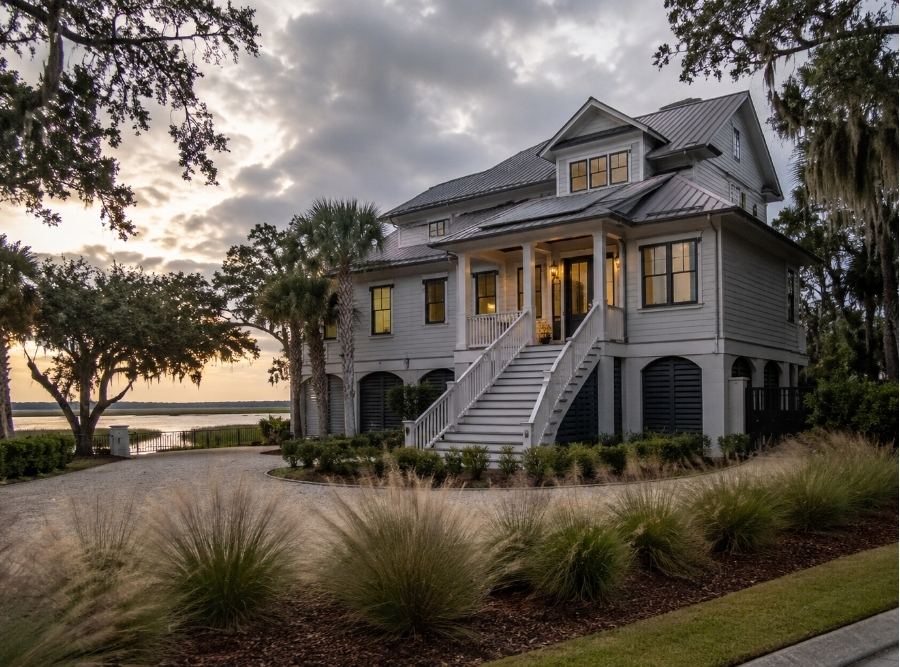
Why Is Homeowners Insurance So Expensive on Hilton Head Compared to the Rest of SC?
Quick Answer:
Homeowners insurance is more expensive on Hilton Head than in many other parts of South Carolina because island homes face higher hurricane exposure, wind-driven rain, flood risk, salt-air deterioration, and elevated rebuilding costs. Insurance companies also price Hilton Head properties differently because many homes are coastal, high-value, older, seasonal, or used as vacation rentals, which increases both claim frequency and claim severity.
A homeowner who moves from Columbia, Greenville, Lexington, or even parts of Bluffton to Hilton Head often expects insurance to cost more near the coast. What usually surprises them is how much more complicated the pricing feels once the quote arrives.
The premium is higher. The deductible may be percentage-based. Flood insurance may be separate. Wind coverage may require a different conversation altogether. The carrier may ask more questions about roof age, occupancy, rental use, elevation, storm protection, and replacement cost than the homeowner expected.
That is when many people start asking the real question: why is homeowners insurance on Hilton Head so much more expensive than the rest of South Carolina?
The answer is not one single surcharge or one simple explanation. Hilton Head sits at the intersection of several insurance pressures at once. Hurricane exposure, coastal wind risk, flooding, luxury reconstruction costs, older housing stock, second-home ownership, vacation rentals, salt air, humidity, and changing insurance-market conditions all stack on top of each other. That layered risk profile is very different from what carriers see in inland markets.
Hilton Head Carries Coastal Risk That Inland South Carolina Does Not
Hilton Head homeowners insurance costs more because coastal properties face concentrated hurricane, wind, flood, and storm-surge exposure that inland homes in South Carolina usually do not experience at the same level.
A home in Greenville may face severe thunderstorms, hail, tree damage, or the occasional wind event. A home in Columbia may deal with summer storms, roof wear, and water intrusion. Those risks matter, but they are not evaluated the same way as a coastal home exposed to hurricane-force winds, tropical storms, wind-driven rain, storm surge, and evacuation conditions.
Hilton Head is different because a single major storm can create widespread losses across thousands of homes at once. Insurance companies call this catastrophe exposure, and it changes the pricing conversation dramatically. The carrier is not only evaluating whether one homeowner may file a claim. It is evaluating how much damage could occur across an entire coastal region if a major hurricane tracks through the Lowcountry.
That concentration of risk is one reason coastal underwriting is more restrictive. A carrier may be comfortable insuring homes throughout the Midlands or Upstate but become much more selective near Hilton Head, Charleston, Beaufort, and the Grand Strand. The closer a home is to high wind exposure, flood-prone areas, or expensive coastal rebuilding conditions, the more carefully the insurer evaluates the property.
This is why comparing Hilton Head premiums to inland South Carolina often leads to frustration. The homes may look similar on paper, but the risk environment behind them is completely different.
Wind, Flood, and Hurricane Damage Are Not One Simple Coverage
Hilton Head insurance is more expensive partly because wind damage, flood damage, and hurricane-related losses are often insured through different coverage structures, each with its own pricing, exclusions, and deductibles.
Many homeowners use the phrase “hurricane insurance” as if it describes one complete policy. In reality, coastal insurance is rarely that simple.
A hurricane can create several different types of damage at the same property. Wind may damage the roof. Wind-driven rain may enter through openings. Storm surge or rising water may flood the structure. Fallen trees may damage exterior features. Power outages and delayed repairs may worsen interior moisture problems. Each part of the loss may be evaluated differently depending on the policy language and cause of damage.
This is where Hilton Head homeowners often get caught off guard. A standard homeowners policy may address certain wind or property losses, but flood insurance is usually separate. Some coastal policies include wind and hail coverage, while others may involve separate wind coverage or different deductible structures. Named-storm deductibles may apply differently than ordinary deductibles, and those deductibles can be much larger than homeowners expect.
The confusion becomes more serious after a storm. A homeowner may believe they are fully protected because they have homeowners insurance, only to discover that flood damage was not included or that the named-storm deductible creates a much higher out-of-pocket cost. On Hilton Head, the insurance question is not simply “Do I have a policy?” It is “How would this entire coverage structure actually respond if wind, flood, and storm damage happened at the same time?”
Replacement Costs Are Higher on the Island
Hilton Head homeowners insurance is also expensive because rebuilding a coastal home on the island can cost significantly more than rebuilding a similar-sized home inland.
Insurance companies price homeowners coverage around the cost to repair or rebuild the home, not simply what the homeowner paid for it. On Hilton Head, that reconstruction-cost calculation can be much higher than buyers expect.
Many island homes have custom finishes, elevated foundations, complex rooflines, impact-resistant features, large windows, outdoor living areas, pools, garages, docks, or architectural requirements from gated communities and associations. In communities like Sea Pines, Palmetto Dunes, Wexford, Long Cove, Spanish Wells, and Port Royal Plantation, rebuilding after a major loss can involve more than replacing standard materials. It may require specialized contractors, architectural review approvals, coastal-code compliance, updated materials, and longer timelines.
After hurricanes or major regional storms, those costs can rise even faster. Contractors become harder to schedule. Materials become more expensive. Emergency mitigation, roof tarping, water removal, mold prevention, and temporary repairs may all be in high demand at the same time. The cost of a claim on Hilton Head can therefore be much higher than a similar claim in an inland neighborhood with easier contractor access and lower reconstruction costs.
This is why trying to reduce premiums by lowering dwelling coverage can become dangerous. A cheaper policy may feel helpful at renewal, but if the home is underinsured after a major storm, the homeowner may discover the savings were not worth the financial exposure.
Roof Age Matters More Near the Coast
Roof age has a major impact on Hilton Head insurance pricing because coastal roofs face stronger wind exposure, salt air, humidity, and storm conditions that can increase the likelihood and severity of claims.
Many homeowners are surprised when an insurance company suddenly focuses heavily on the age and condition of the roof. They may feel the roof still has useful life left, especially if there have been no major leaks. From the carrier’s perspective, however, an aging roof on the coast can represent a much larger risk than an aging roof inland.
Hilton Head roofs are exposed to a demanding environment. Salt air can accelerate deterioration. Humidity can contribute to moisture problems. Tropical storms and strong coastal winds repeatedly test roofing systems. Wind-driven rain can exploit small weaknesses around shingles, flashing, vents, skylights, and roof edges. Once a roof begins to fail during a storm, interior water damage can spread quickly.
That is why some carriers restrict eligibility, increase pricing, reduce available options, or decline coverage when roof age becomes a concern. This does not mean every older roof creates the same problem, but it does mean roof condition plays a central role in coastal underwriting.
For many homeowners, roof maintenance is no longer just a property-care issue. On Hilton Head, it can directly affect whether strong insurance options remain available.
Second Homes and Vacation Rentals Add More Complexity
Hilton Head insurance can cost more because many island properties are second homes, seasonal homes, or vacation rentals, and those usage patterns often create higher risk than full-time owner-occupied homes.
A home that sits empty for long stretches creates different concerns than a primary residence occupied every day. A small plumbing leak in a full-time home may be discovered quickly. In a second home, that same leak can continue for days or weeks before anyone notices. In Hilton Head’s humid climate, delayed water discovery can quickly turn into mold, damaged flooring, drywall repairs, cabinet damage, and expensive mitigation work.
Vacation rentals add another layer. Short-term guests create more wear and tear, more liability exposure, and more uncertainty around how the property is being used. A property near Coligny, Forest Beach, Palmetto Dunes, or Sea Pines with frequent guest turnover may face a very different risk profile than a primary residence in an inland neighborhood. Pools, decks, stairs, bicycles, golf carts, docks, grills, and outdoor living areas can all increase the chance of injury or property damage.
Insurance companies price those differences because they affect claim frequency and severity. An out-of-state owner relying on cleaners or property managers may have a good maintenance plan, but the carrier still evaluates the exposure differently than a full-time resident who sees the home every day.
That is one reason Hilton Head insurance conversations often include questions about occupancy, rental activity, property management, vacancy periods, and maintenance routines. Those details can materially affect both pricing and eligibility.
Coastal Insurance Markets Are Under Pressure Beyond One Homeowner’s Claim History
Hilton Head homeowners insurance can rise even when a homeowner has never filed a claim because coastal pricing is influenced by regional storm losses, reinsurance costs, rebuilding inflation, and carrier appetite across the entire market.
This is one of the most frustrating parts of insurance for careful homeowners. A person may go years without filing a claim and still see premiums rise sharply at renewal. That can feel unfair until you understand how coastal insurance pricing works behind the scenes.
Insurance companies do not price Hilton Head homes only based on one property’s personal claim history. They also evaluate regional loss trends, hurricane modeling, reinsurance costs, construction inflation, and the amount of coastal risk they are willing to keep on their books. When major storms affect coastal areas anywhere in the region, insurers and reinsurers often reassess how much catastrophe exposure they are carrying.
Reinsurance matters because it is essentially insurance for insurance companies. When the cost of reinsurance rises after large storm years or increased catastrophe modeling concerns, those costs can eventually influence homeowner premiums. Even if Hilton Head avoids a direct hit in a given year, the broader coastal insurance market can still tighten.
That is why homeowners may see fewer carriers willing to quote, more detailed underwriting questions, stricter roof requirements, higher deductibles, or increased premiums even without personal losses. The homeowner did not necessarily do anything wrong. The market around coastal risk changed.
Comparing Premiums Without Comparing Deductibles Can Be Misleading
A lower Hilton Head insurance premium does not always mean better coverage because named-storm deductibles, wind exclusions, flood gaps, and replacement-cost limits can shift more financial risk back to the homeowner.
This is where shopping purely by price can create real problems.
Two policies may appear similar because the annual premium is close, but the deductible structure may be completely different. One policy may include wind coverage while another restricts it. One may carry stronger ordinance-or-law protection while another leaves more code-upgrade exposure with the homeowner. One may estimate replacement cost more accurately while another may be priced lower because the dwelling limit is too thin.
Named-storm deductibles deserve special attention on Hilton Head. Many coastal policies use percentage-based deductibles tied to the insured value of the home. That means the out-of-pocket cost after a hurricane can be far higher than the deductible homeowners are used to seeing on inland policies.
A homeowner may save money on premium but unknowingly accept a deductible they could not comfortably absorb after a major storm. That is not a true savings strategy. It is a transfer of risk from the insurance company back to the homeowner.
The better question is not simply “Which policy is cheapest?” The better question is “Which policy gives me the most reliable protection for the risks my Hilton Head home actually faces?”
How Homeowners Can Think About Controlling Costs Without Weakening Coverage
Hilton Head homeowners may be able to manage insurance costs by improving roof condition, reviewing wind mitigation, maintaining accurate replacement-cost estimates, comparing carriers, evaluating deductibles carefully, and making sure flood and wind coverage are addressed separately.
There is no magic solution that makes Hilton Head insurance price like an inland home. The coastal risk is real, and carriers price for that reality. Still, homeowners may have more control than they realize when coverage is reviewed carefully.
Roof condition is often one of the first places to look because it can influence both eligibility and pricing. Wind mitigation features may also matter, especially when homes have updated roofing systems, stronger openings, impact-resistant windows, or other improvements that reduce storm vulnerability. Replacement-cost estimates should be reviewed because underinsurance can create major problems after a loss, while inaccurate assumptions can also distort pricing.
Flood insurance deserves its own review rather than being treated as an afterthought. A home does not have to sit directly on the ocean to have meaningful flood exposure, especially in areas affected by marsh systems, lagoons, drainage limitations, tidal water, or storm surge. Homeowners should also understand whether the home is primary, secondary, seasonal, or rental-use because occupancy classification can influence coverage and price.
This is where an independent agency can be valuable. Not every carrier evaluates Hilton Head homes the same way. One company may be restrictive where another has more appetite. One may treat roof age differently. Another may offer stronger options for certain construction types, locations, or occupancy patterns. The advantage is not simply having more quotes. The advantage is having more ways to structure the coverage correctly.
The Real Cost Is Not the Premium — It Is Being Underprepared After a Storm
Hilton Head homeowners insurance is expensive because the island carries expensive risk.
That does not mean every premium increase is easy to accept, and it does not mean homeowners should avoid asking hard questions. They should. Insurance should be reviewed carefully, especially when renewals jump, deductibles change, flood requirements appear, or roof age begins affecting available options.
But the most important goal is not simply making the premium smaller. The goal is avoiding a situation where a homeowner saves money upfront and then discovers after a hurricane, flood, roof failure, or major water loss that the coverage was too thin, the deductible was too high, or the policy did not respond the way they expected.
For homeowners in Hilton Head, Bluffton, Sea Pines, Palmetto Dunes, Forest Beach, Shelter Cove, Hilton Head Plantation, and surrounding Lowcountry communities, insurance should be treated as part of the true cost of coastal ownership. A careful policy review can help separate unavoidable coastal pricing from avoidable coverage mistakes.

Coastal Haven Insurance Partners is an independent, locally owned insurance agency located in Bluffton, SC (40 Pennington Dr Suite E). Led by partners Coley Davis, Travers Davis, and William Voelkel, the firm brings over 30 years of combined insurance and leadership experience to the South Carolina Lowcountry. The team specializes in tailored homeowners, flood, windstorm, auto, and commercial insurance. They share straightforward guidance to help coastal residents and business owners protect their assets with confidence.