
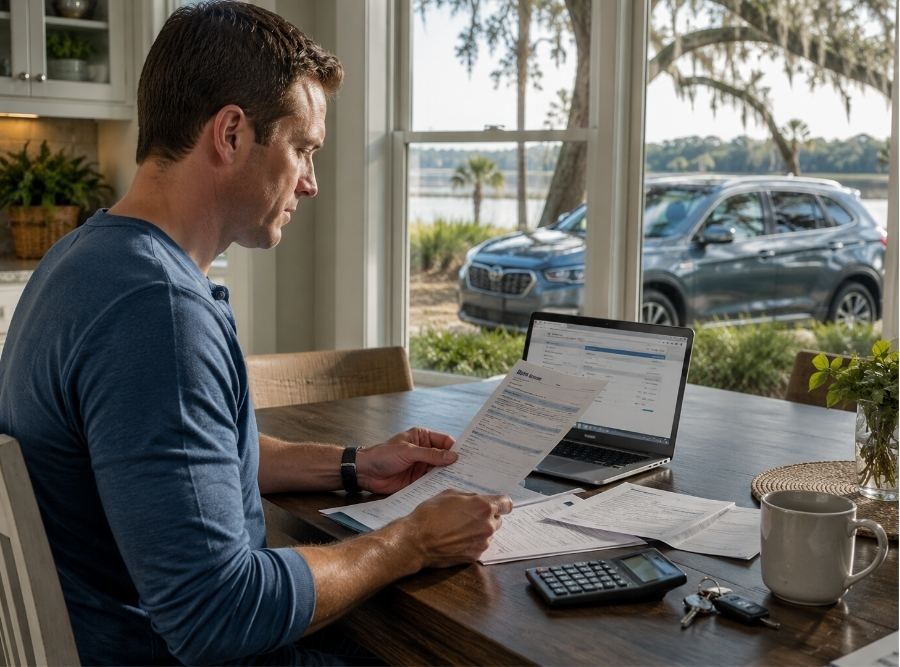
How Can I Lower My Car Insurance Premium in Bluffton, SC?
Quick Answer:
You can lower your car insurance premium in Bluffton, SC by reviewing your coverage, comparing carriers, adjusting deductibles carefully, asking about discounts, bundling policies, and making sure your policy still matches your vehicle, drivers, mileage, and risk level. The goal is not simply to buy the cheapest policy, but to reduce unnecessary cost without creating dangerous coverage gaps.
Many Bluffton drivers are paying more than they need to because their policy has not been reviewed after life changes, vehicle changes, rate increases, or household changes. An independent insurance agency can compare multiple carriers and help identify savings opportunities while keeping important protections in place.
A rising car insurance bill can feel especially frustrating when nothing obvious has changed. You have not had an accident. You have not received a ticket. You may even drive less than you used to. Then the renewal arrives, and the premium is noticeably higher anyway.
That experience has become familiar for many drivers in Bluffton and across the South Carolina Lowcountry. Auto insurance premiums are affected by much more than one person’s driving record. Regional accident trends, storm exposure, repair inflation, vehicle technology, claims frequency, credit-based insurance scoring, household drivers, and ZIP-code-level risk can all influence what a carrier charges. In a fast-growing coastal market like Bluffton, those pressures can show up even for responsible drivers with clean records.
The challenge is knowing how to lower the premium without weakening the policy in ways that create bigger problems later. Saving money is important, but reducing coverage blindly can leave a driver exposed after a serious accident, flood loss, uninsured driver claim, or total vehicle loss. A smart premium review should look for waste, outdated assumptions, missed discounts, and better carrier options before cutting protection that may still matter.
Start by Understanding Why the Premium Went Up
The first step in lowering car insurance is understanding what actually changed. Many drivers assume their rate should only increase after an accident or ticket, but insurance pricing does not work that simply. A premium can rise because of broader claim trends, higher repair costs, vehicle replacement costs, storm exposure, household changes, credit-related rating factors, or changes in how a carrier views a specific area.
In Bluffton, local conditions can affect pricing more than people expect. Heavy commuter traffic along Highway 278, Bluffton Parkway, Buckwalter Parkway, and routes toward Hilton Head Island creates steady accident exposure. Seasonal tourism adds congestion near Hilton Head access points, while hurricane season and tropical rainfall increase comprehensive claim concerns. As vehicles become more expensive to repair, even smaller accidents can cost carriers significantly more than they did several years ago.
A common misconception is that loyalty automatically earns the lowest rate. While some carriers do offer loyalty-related benefits, staying with the same company for years does not guarantee the policy remains the best fit. Carriers change their pricing, appetite, underwriting rules, and discount structures over time. A company that was competitive three years ago may no longer be the strongest option today.
This is where policy remarketing can make a meaningful difference. Instead of assuming the renewal is the best available price, a thorough review compares the current policy against other carrier options, available discounts, coverage needs, and deductible choices. That process often reveals whether the issue is the coverage structure, the carrier fit, the household profile, or a combination of factors.
Look for Savings Without Stripping Away the Wrong Coverage
The fastest way to lower a premium is often to remove coverage, but that is not always the smartest way. In coastal South Carolina, cutting comprehensive coverage just to reduce the monthly bill can become expensive if a vehicle is damaged by flooding, storm debris, theft, hail, or falling trees. Likewise, reducing liability limits too aggressively can create serious financial exposure after an at-fault accident.
The better approach is to identify coverage that no longer fits the vehicle or household while preserving protection against losses that would be difficult to absorb personally. For example, collision coverage on an older paid-off vehicle may deserve a closer look if the premium and deductible are high compared to the vehicle’s actual cash value. But that decision should be weighed against whether the owner could realistically repair or replace the vehicle without insurance help.
Deductibles should also be reviewed carefully. Raising a deductible can lower the premium, but only if the new deductible is an amount the driver could actually afford during a claim. A deductible that looks good on paper can become a real problem after an accident, especially for households already managing higher home insurance, flood insurance, and daily living costs in the Lowcountry.
This is one of the places where online quote shopping often falls short. A quote may appear cheaper because important coverage was reduced, deductibles were raised too far, or assumptions about drivers and vehicle usage were incomplete. The monthly payment may improve, but the policy may no longer protect the household in a realistic way.
Use Discounts, Bundling, and Driver Details More Strategically
Many drivers miss savings because their policy information is outdated. A household may have a driver who now works from home, a student who moved away, a vehicle that is driven far less than before, or a paid-off car still rated the same way it was years ago. Small details can affect eligibility for discounts or better pricing tiers.
Bundling home and auto insurance can sometimes reduce premiums, especially for Bluffton homeowners balancing auto, homeowners, flood, umbrella, and other policies. However, bundling should still be reviewed carefully. Sometimes the combined package is excellent. Other times, one carrier may be strong for home insurance while another is more competitive for auto. The point is not to bundle automatically, but to compare the total picture.
Low-mileage discounts, telematics programs, paperless billing, autopay, multi-vehicle discounts, safe-driver discounts, and good-student discounts may also help depending on the carrier. These savings are not always applied automatically, especially if the policy has not been reviewed in detail for several renewal cycles.
Teen drivers deserve special attention because adding a young driver can dramatically change a household premium. Families near May River High School, Bluffton High School, River Ridge Academy, and surrounding neighborhoods often experience sticker shock when a new driver is added. In that situation, the answer is not simply choosing the cheapest policy available. The better strategy is to review vehicle assignments, available student discounts, driver training options, deductible structure, and whether the household is with the right carrier for youthful-driver pricing.
Be Careful With “Cheap Insurance” Decisions That Create Bigger Risks
When premiums become stressful, it is natural to search for the cheapest car insurance in Bluffton. The problem is that the lowest quoted price is not always the lowest long-term cost. A policy that saves money today can become extremely expensive after a claim if it carries weak liability limits, unrealistic deductibles, missing comprehensive coverage, or poor claim support.
One of the most common mistakes is choosing state minimum liability limits simply because they are legal. Legal minimum coverage may satisfy South Carolina requirements, but that does not mean it is enough for a serious accident. Medical costs, vehicle repair costs, rental expenses, and lawsuit exposure can exceed low limits quickly, particularly in multi-vehicle crashes along busy Bluffton and Hilton Head commuter corridors.
Another risky move is letting a policy lapse while shopping for better pricing. A lapse can make future insurance more expensive and may limit access to preferred carrier options. Drivers should always have replacement coverage active before canceling an existing policy.
Small claims can also affect long-term cost more than people expect. Filing a claim for minor damage may seem reasonable in the moment, but depending on the deductible, claim type, and carrier, it may affect future pricing or remove discounts. That does not mean claims should be avoided when they are legitimate and significant. It simply means drivers should understand the long-term premium impact before using insurance for every minor repair.
Why Bluffton Drivers Should Review Coverage More Often
Bluffton is not a static insurance market. The area continues to grow, traffic patterns continue to change, and coastal weather risk remains part of everyday underwriting. A policy that worked well when someone first moved to the area may not be ideal after buying a new vehicle, adding a teen driver, retiring, working from home, paying off a loan, or moving to a different neighborhood.
A retiree in Sun City Hilton Head who drives fewer miles may have different opportunities than a commuter traveling daily to Savannah or Hilton Head Island. A family in New Riverside with multiple vehicles and a teen driver may need a different strategy than a seasonal resident with a garage-kept car. A driver with a luxury SUV in Palmetto Bluff, Hampton Lake, Belfair, or Berkeley Hall may face higher premiums because modern parts, sensors, cameras, and calibration systems can make repairs much more expensive.
That is why premium reduction should be treated as a coverage optimization process, not just a quote hunt. The strongest review looks at the vehicle, drivers, mileage, deductibles, liability limits, discounts, carrier fit, and local risk exposure together. Sometimes the savings come from changing carriers. Sometimes they come from updating household information. Sometimes they come from adjusting coverage on an older vehicle. And sometimes the best advice is not to cut certain coverage at all because the financial risk would be too great.
The Smartest Way to Lower Your Premium Is to Review the Whole Policy
Lowering car insurance in Bluffton should not mean gambling with protection. The better goal is to remove unnecessary cost while keeping the policy strong enough to protect against the accidents, storms, uninsured drivers, and financial risks that matter most in coastal South Carolina.
At Coastal Haven Insurance, we review auto insurance with that bigger picture in mind. As an independent agency serving Bluffton, Hilton Head Island, Okatie, Beaufort, and the surrounding Lowcountry, we are not tied to one carrier or one pricing system. That allows us to compare options, look for missed discounts, evaluate deductible choices, and help clients understand where savings make sense and where cutting coverage could create avoidable risk.
The premium matters. But so does what happens after the claim. The best insurance review should help you feel more confident about both.

Coastal Haven Insurance Partners is an independent, locally owned insurance agency located in Bluffton, SC (40 Pennington Dr Suite E). Led by partners Coley Davis, Travers Davis, and William Voelkel, the firm brings over 30 years of combined insurance and leadership experience to the South Carolina Lowcountry. The team specializes in tailored homeowners, flood, windstorm, auto, and commercial insurance. They share straightforward guidance to help coastal residents and business owners protect their assets with confidence.