
Does My Credit Score Affect Car Insurance Rates in South Carolina?
Quick Answer:
Yes. In South Carolina, insurance companies commonly use credit-based insurance scores as part of how they calculate car insurance premiums. Drivers with lower credit scores often pay higher rates even if they have clean driving records, while stronger credit can help qualify for lower premiums, better payment options, and preferred insurance tiers.
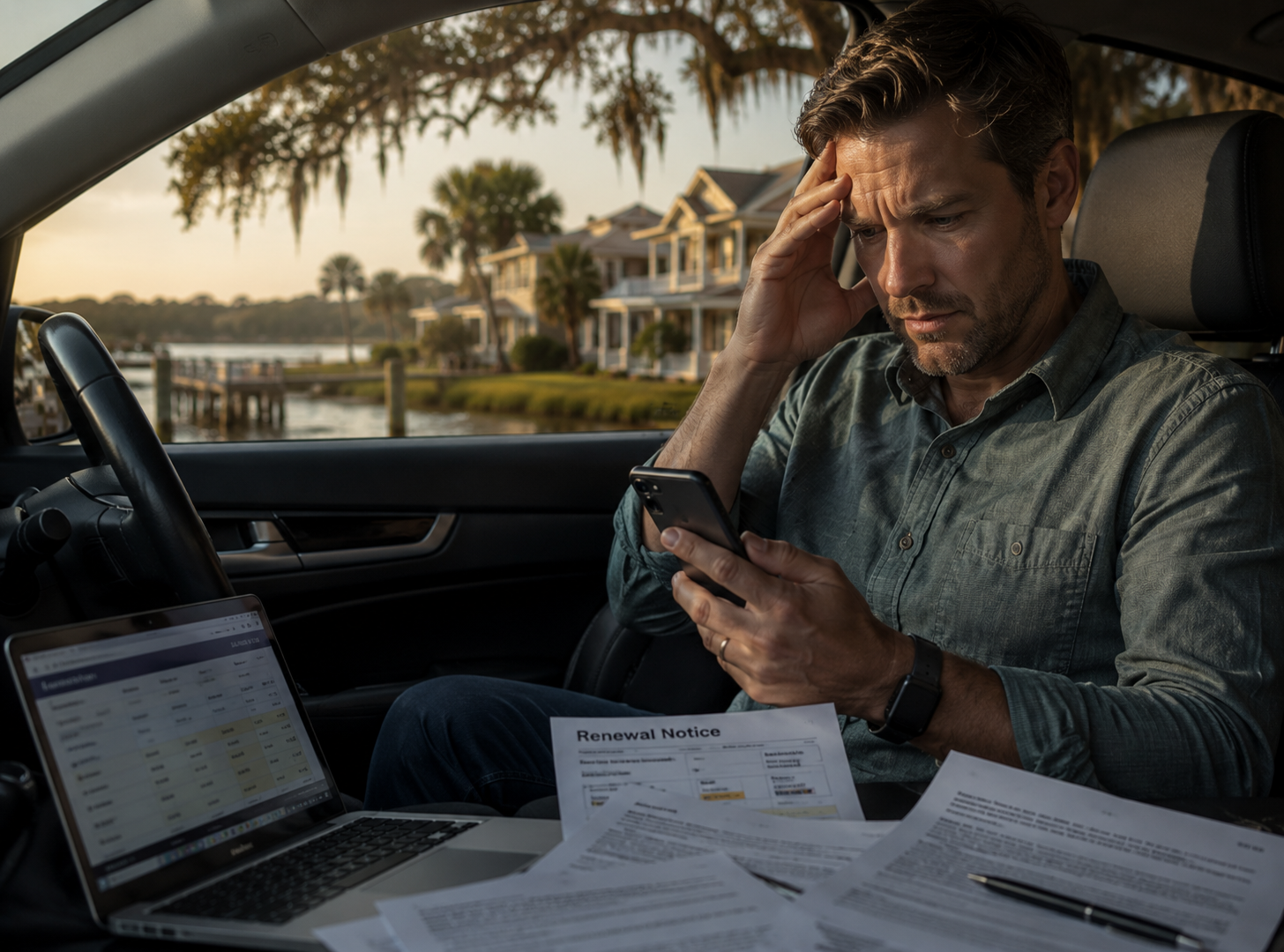
A Bluffton driver with no accidents suddenly sees their renewal increase by hundreds of dollars. A family in Beaufort dealing with medical debt starts shopping for cheaper insurance and discovers every quote is unexpectedly expensive. A young driver in Greenville with a clean record wonders why their rates are still dramatically higher than friends with similar vehicles.
For many South Carolina drivers, the most frustrating part is not simply the cost itself. It is realizing their insurance pricing may be tied to financial issues they never expected insurers to consider in the first place.
At Coastal Haven Insurance, this is one of the most misunderstood conversations we have with clients throughout Bluffton, Hilton Head Island, Beaufort, Charleston, and the South Carolina Lowcountry. Many people assume insurance companies only care about accidents and tickets. In reality, modern underwriting models evaluate a much broader picture of risk, including credit-related data.
That does not mean insurers are judging someone personally or reviewing finances the way a bank would for a loan. But credit-related insurance scoring does influence pricing throughout much of the insurance industry, and understanding how it works can help drivers make better long-term decisions instead of feeling blindsided by unexplained premium increases.
Why Do Insurance Companies Look at Credit Scores?
Yes, many insurance companies use credit-related information as part of their underwriting process. In South Carolina, insurers commonly use credit-based insurance scores to help determine pricing tiers and overall risk evaluation.
This is where confusion usually starts.
Most drivers understandably associate credit scores with mortgages, loans, or credit cards. Insurance feels completely separate, so people are shocked when their rates increase after financial hardship even though their driving record stayed clean.
Insurance companies do not typically use traditional credit scores the exact same way lenders do. Instead, many carriers use insurance scoring models built around statistical risk analysis. These models evaluate patterns tied to payment history, debt utilization, credit history length, collections activity, and overall financial stability.
The reasoning behind this system is statistical rather than personal. Over time, insurers have found correlations between certain financial patterns and future claims frequency. That explanation rarely makes drivers feel better emotionally, especially when they have never filed a claim.
We regularly speak with drivers throughout Bluffton and Hilton Head who say some version of the same thing:
“My driving record is clean. Why am I paying more than someone else?”
In many situations, the answer involves underwriting tier placement rather than driving history alone.
Why This Feels Unfair to So Many Drivers
For most people, insurance feels like it should be based entirely on how safely they drive. When premiums rise because of financial hardship instead of accidents or tickets, the situation often feels disconnected from common sense.
That emotional frustration is real, and many drivers feel blindsided by it.
A Bluffton family dealing with unexpected medical debt after a hospitalization may suddenly see auto insurance renewal pricing increase even without accidents or violations. A recent divorce, job loss, or temporary financial disruption can quietly affect underwriting months later, long after the initial hardship occurred.
Many South Carolina drivers are already balancing rising mortgage payments, flood insurance costs, hurricane-related deductibles, vehicle expenses, and increasing everyday living costs all at the same time. When insurance premiums suddenly climb alongside those pressures, it understandably feels personal.
But insurers are not typically evaluating morality or responsibility in a human sense. They are evaluating predictive risk patterns through large-scale underwriting models.
The problem is that almost nobody explains this clearly during the process, which leaves many drivers frustrated, confused, and feeling unfairly punished.
Why Is My Car Insurance Expensive Even Without Accidents?
A clean driving record does not automatically guarantee low insurance premiums.
Insurance companies evaluate many different factors when calculating rates, including:
- credit-based insurance scores,
- prior insurance history,
- vehicle repair costs,
- ZIP code,
- claim frequency trends,
- annual mileage,
- and broader underwriting data.
Along coastal South Carolina, those pressures can stack together quickly. Drivers throughout Bluffton, Hilton Head, Charleston, and Beaufort are already dealing with elevated insurance environments tied to storm exposure, tourism congestion, rapid population growth, and increasingly expensive vehicle repairs.
That means someone can be an extremely responsible driver while still experiencing higher premiums because the overall underwriting picture changed behind the scenes.
We regularly see situations where two drivers with nearly identical vehicles and driving records receive dramatically different premiums simply because their insurance scoring profiles are different.
That disconnect is often what creates the feeling that insurance pricing is random or impossible to understand.
Does Checking Insurance Quotes Hurt Your Credit?
In most cases, no. Getting car insurance quotes generally does not hurt your credit score the way applying for multiple loans or credit cards can.
Insurance companies typically use soft inquiries rather than hard credit pulls when reviewing insurance scoring information. That means drivers can usually compare quotes without damaging their credit profile.
However, another misunderstanding happens here. Many online quote tools provide only preliminary estimates before underwriting fully reviews the application. Drivers often believe they locked in a final price, only to see the premium change later after underwriting evaluates insurance scoring factors more thoroughly.
This becomes especially frustrating for South Carolina drivers already struggling with affordability concerns. We regularly see people spend hours comparing online quotes only to discover many of the advertised prices were never fully underwritten to begin with.
That is one reason independent insurance guidance can matter so much during difficult markets. Instead of relying entirely on automated quote systems, we help clients compare carriers more realistically and identify which companies may evaluate their overall situation more favorably.
Can Bad Credit Increase Car Insurance Rates?
Yes. In South Carolina, lower credit-based insurance scores commonly result in higher premiums, fewer preferred-carrier options, larger required down payments, and more expensive monthly payment structures.
In some situations, drivers notice rate increases after financial setbacks even though they never filed a claim or received a ticket. Medical debt, missed payments, collections activity, rising balances, or major life disruptions can all influence how underwriting systems classify risk.
This often catches people off guard because the increase may happen quietly at renewal rather than immediately after the financial issue occurs.
We regularly speak with South Carolina drivers who say:
“My insurance suddenly exploded and nothing even happened.”
From their perspective, that statement feels completely true. But behind the scenes, underwriting systems may have reassessed the policy into a different pricing tier after updated insurance scoring information became available.
Young drivers often experience this problem differently. In many cases, they do not have “bad” credit at all. They simply have limited credit history or thin financial profiles, which gives insurers less underwriting data to work with.
That distinction matters because many younger drivers feel financially penalized despite doing everything responsibly.
What Happens if Financial Problems Cause a Policy Lapse?
This is where affordability problems can become significantly more dangerous long-term.
Many drivers dealing with financial strain try to reduce costs by delaying payments, cancelling policies temporarily, lowering liability limits aggressively, or shopping frantically for the cheapest possible coverage. Unfortunately, coverage lapses often create even larger pricing problems afterward.
Insurance companies view continuous coverage history as an important underwriting factor. A lapse can signal instability or elevated future risk, which may reduce access to preferred carriers and push drivers toward more expensive non-standard insurance markets.
We regularly see situations where someone initially saves money by cancelling a policy during financial hardship, only to discover replacement coverage becomes dramatically more expensive later.
The financial danger is not limited to premium increases either. Drivers carrying state-minimum liability limits or removing uninsured motorist coverage to reduce costs may leave themselves severely exposed after a serious accident.
That becomes especially risky throughout high-traffic South Carolina corridors like Highway 278 near Hilton Head, I-26 near Charleston, I-85 through the Upstate, or heavily congested tourism areas near Myrtle Beach.
What Actually Helps Lower Insurance Costs Over Time?
There is no instant trick that suddenly fixes expensive car insurance overnight. Most long-term improvement happens gradually through stability and strategic adjustments over time.
Maintaining continuous coverage is one of the most important factors. Even during financial hardship, avoiding policy lapses can help preserve access to stronger carriers and more stable pricing structures later.
Reviewing credit reports for errors, reducing debt gradually, maintaining consistent payment history, and avoiding missed insurance payments can also improve underwriting outcomes over time. Bundling policies appropriately may create additional savings opportunities as well.
Another major factor is carrier selection itself. Some insurance companies weigh credit-related underwriting much more heavily than others. That means two insurers may produce dramatically different premiums for the exact same driver.
At Coastal Haven Insurance, we regularly help clients compare multiple carriers because the cheapest online quote is not always the best long-term insurance position. Sometimes the better strategy is building stable coverage that improves gradually instead of constantly reacting to short-term pricing swings.
The Bigger Risk Is Often the Coverage People Remove
When insurance becomes expensive, many drivers understandably focus only on lowering the monthly payment. But aggressively reducing coverage can create much larger financial exposure later.
We regularly see drivers increase deductibles beyond what they could realistically afford after an accident, remove uninsured motorist coverage, or carry minimum liability limits simply to reduce premiums temporarily.
The problem is that South Carolina roads are already carrying heavier traffic, tourism congestion, distracted driving exposure, and increasingly expensive accident claims. A low-cost policy with major coverage gaps can become financially devastating after a serious collision.
This becomes especially dangerous for families already under financial strain because a single uncovered accident can create long-term debt problems far larger than the premium savings itself.
At Coastal Haven Insurance, we believe the goal is not simply finding the cheapest policy possible. The goal is building coverage that remains affordable while still protecting clients realistically when something serious happens.
The Bigger Problem Usually Starts Before the Renewal Notice Arrives
For many South Carolina drivers, frustration with insurance pricing does not begin when the renewal arrives. It often begins months earlier when financial pressure quietly starts affecting underwriting behind the scenes.
A credit score does not define someone’s responsibility as a driver, but it can absolutely affect how insurance companies evaluate risk and calculate premiums. Understanding that system early gives drivers a better opportunity to make proactive decisions instead of reacting after rates have already climbed.
We have seen many situations where the real financial strain came less from one premium increase and more from years of instability created by coverage lapses, rushed policy decisions, misunderstanding underwriting rules, or removing important protection simply to lower the monthly bill temporarily.
As an independent agency, Coastal Haven Insurance helps drivers throughout Bluffton, Hilton Head Island, Beaufort, and the South Carolina Lowcountry review coverage carefully, compare carriers strategically, and make long-term insurance decisions with greater clarity.
If your auto insurance rates feel unusually high or you want a second opinion on your current policy, we are here to help you understand what may actually be affecting your pricing and what options may improve your situation moving forward.

Coastal Haven Insurance Partners is an independent, locally owned insurance agency located in Bluffton, SC (40 Pennington Dr Suite E). Led by partners Coley Davis, Travers Davis, and William Voelkel, the firm brings over 30 years of combined insurance and leadership experience to the South Carolina Lowcountry. The team specializes in tailored homeowners, flood, windstorm, auto, and commercial insurance. They share straightforward guidance to help coastal residents and business owners protect their assets with confidence.